Booking choice: The Tra Que herb village class, from $32 per person. Check dates Tour details
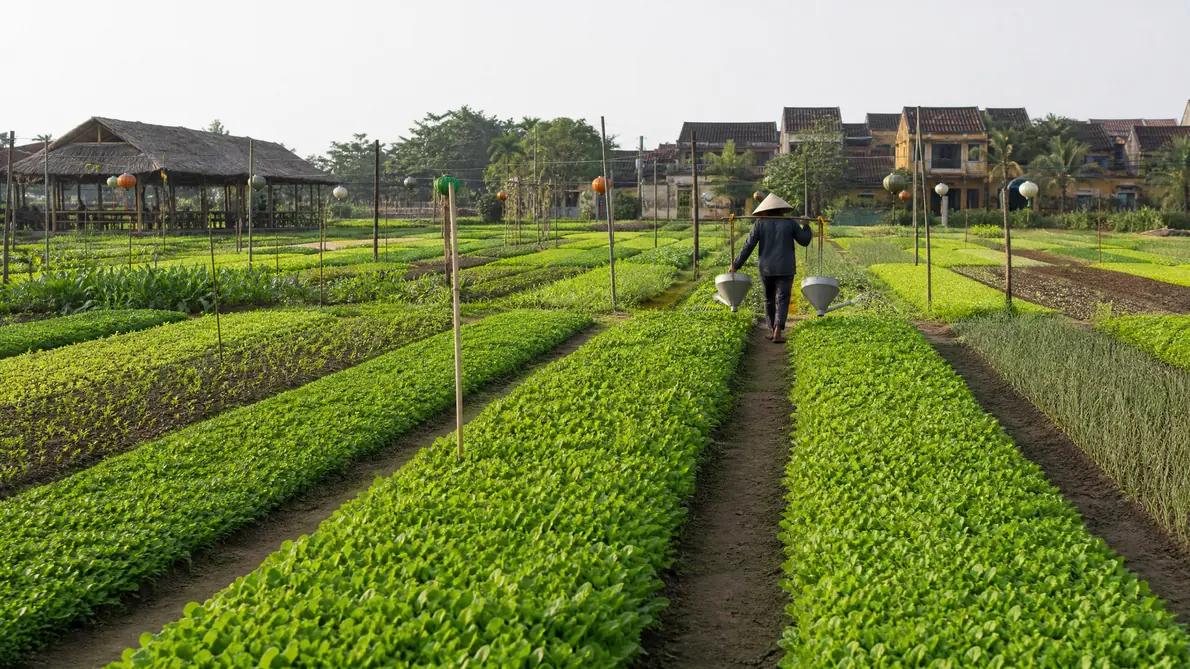
Ride a bicycle north out of Hoi An for a few minutes and the houses give way to long, raised beds of green. This is Tra Que, a farming village between the De Vong River and the Tra Que Lagoon that has grown herbs for the town's kitchens for centuries. It is now a protected piece of national heritage, and in 2024 UN Tourism named it one of its Best Tourism Villages.
Below: where Tra Que is and how old it is, what grows there, the seaweed trick behind the flavor, how a class in the gardens runs, the three classes that cook there, getting there on your own, and when to go.
The quick answer
Tra Que sits about 2.5 km north of Hoi An's center and grows around 55 kinds of vegetables and herbs on beds fed with seaweed from the lagoon. Two classes on this site cook right in the village, and a third holds its evening class in a Tra Que herb garden. The Tra Que herb village class starts with a welcome drink among the beds and cooks 4 dishes in 2.5 hours, from $32. No pickup: you make your own way to the village.
Where is Tra Que vegetable village?
About 2.5 km north of Hoi An's center, in Hoi An Tay Ward of Da Nang City, on land between the De Vong River and the Tra Que Lagoon.
The Da Nang Department of Tourism puts it about 2.5 km north of Hoi An's center; UN Tourism says about 3 km north of the Ancient Town. Either way it is a short bicycle ride. Hoi An has been part of Da Nang City since July 2025, which is why new addresses say Hoi An Tay Ward. The class listings still use the older address of Cam Ha commune.
- Size: about 18 ha of vegetable land, per the Da Nang Department of Tourism.
- People: roughly 200 households, according to the Hoi An Center for Cultural Heritage Management. UN Tourism counts 326 workers in vegetables and tourism.
- Output: around 800 tons of vegetables a year, grown to VietGAP standards, per UN Tourism.
It is a working village first. The beds you walk past are someone's living, so stay on the paths and ask before you pick anything.
How old is Tra Que village?
Centuries old, though the sources count differently: the Da Nang Department of Tourism says the first Vietnamese settlers arrived more than 300 years ago, and UN Tourism says the village was founded over 500 years ago as a fishing community.
The Department's longer history adds a few details worth knowing:
- Before the farmers: archaeologists found traces of the Sa Huynh culture, about 2,000 years old. The first settlers from the Pham, Mai, Nguyen and Le families fished and caught shrimp.
- The name: folklore says an 18th-century king tasted a local herb that smelled like tea (tra) and bit like cinnamon (que). The name appears in a land register from 1818.
- The wars: the village was a revolutionary base. Residents farmed by day and dug shelters at night.
Two titles came recently. On 4 April 2022, Decision No. 784 of the Ministry of Culture, Sports and Tourism placed Tra Que's vegetable growing on the National Intangible Cultural Heritage List, under folk knowledge and traditional craftsmanship. In 2024 UN Tourism added it to its Best Tourism Villages, as reported by the Vietnam News Agency and Da Nang newspaper.
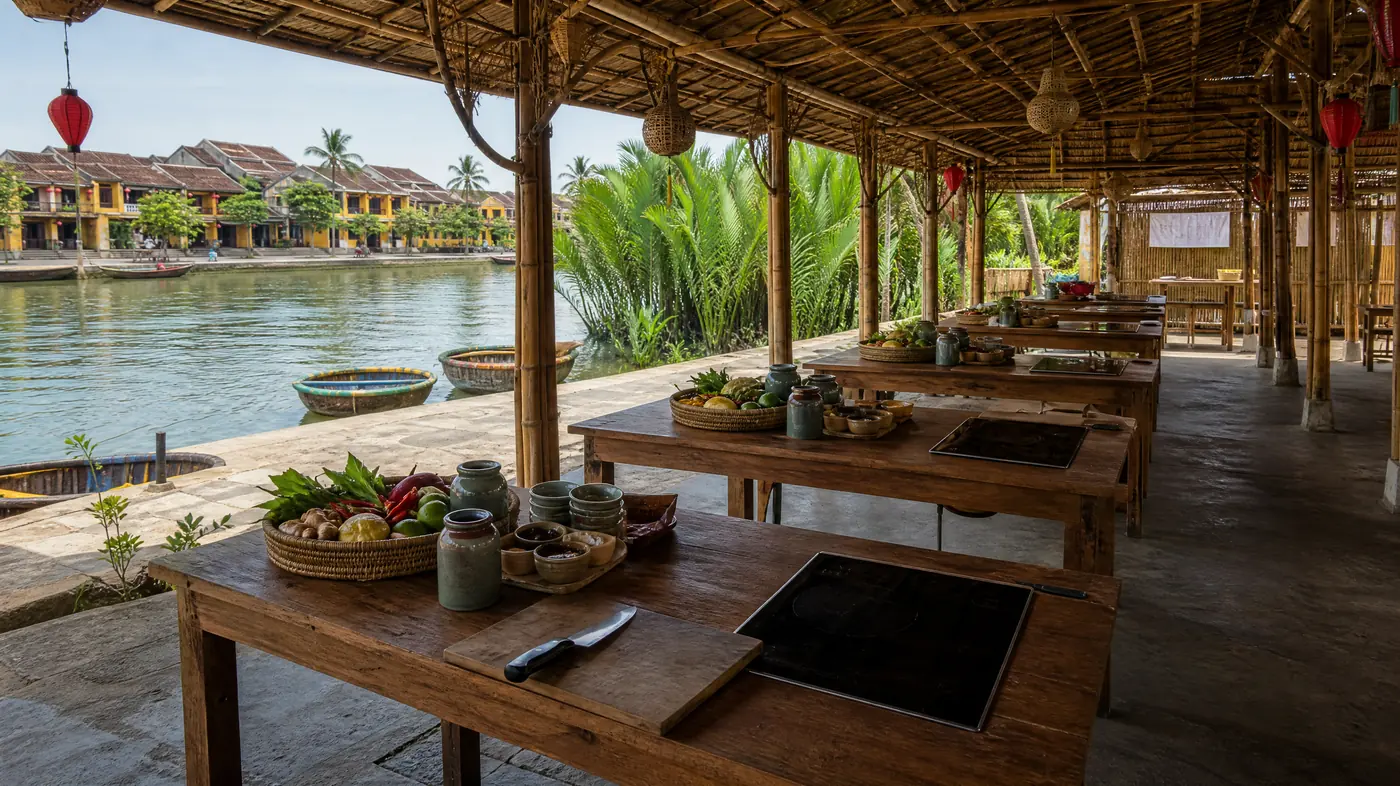
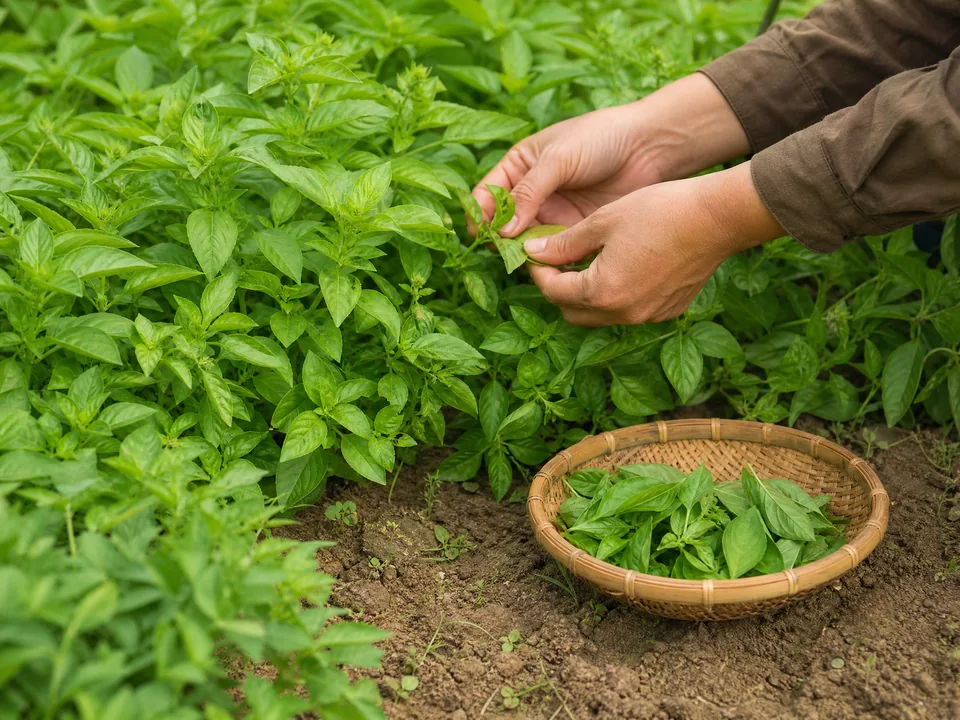
Cook 4 dishes among the herb beds of Tra Que, with a welcome drink and the recipes to take home.
Check dates for the Tra Que herb village classWhat herbs grow in Tra Que?
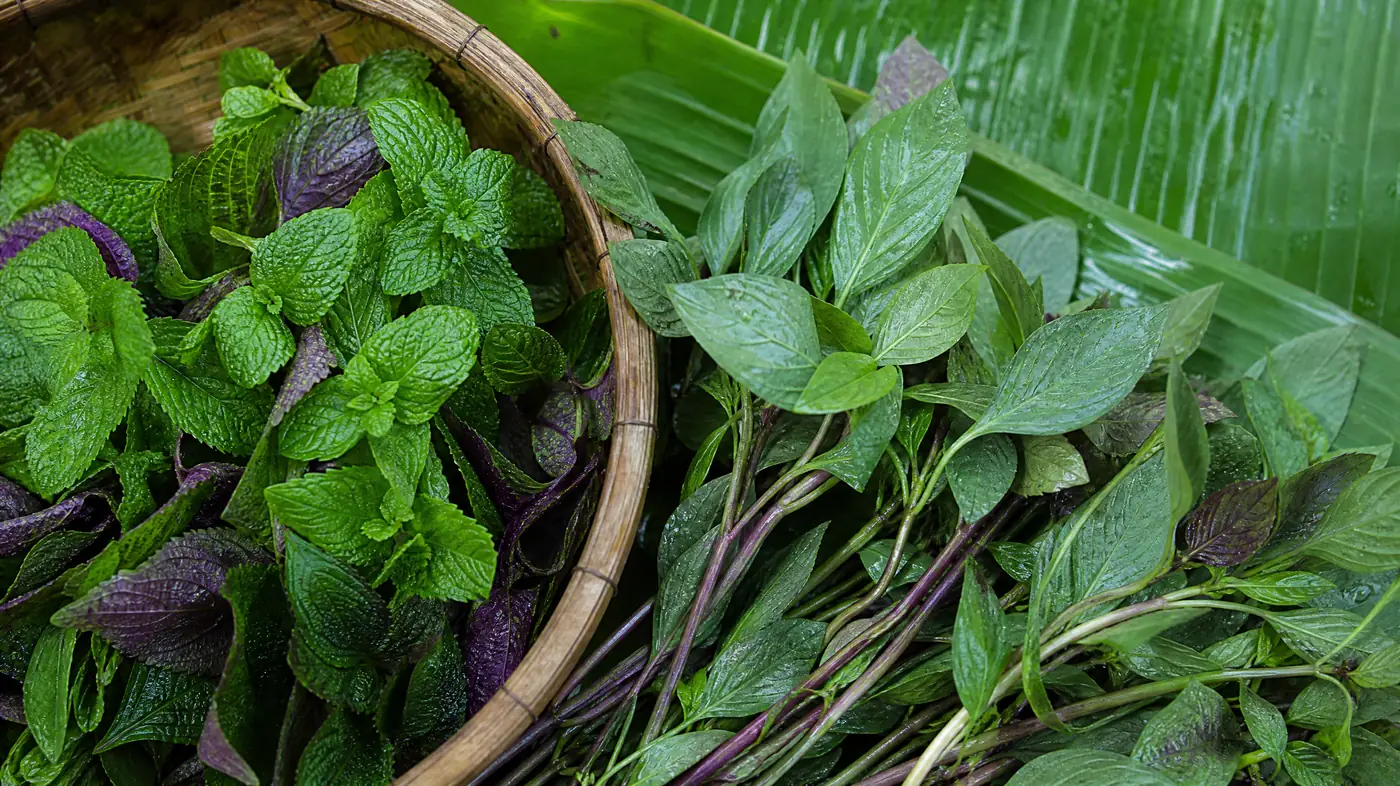
Around 55 kinds of vegetables and herbs, mostly old local varieties: basil, perilla, Vietnamese coriander, spring onions, cilantro, fish mint, chives and baby mustard greens among them.
The Da Nang Department of Tourism describes Tra Que greens as smaller, with thicker leaves and a stronger smell than the same plants grown elsewhere. That aroma is the whole point. It is what lifts the dishes Hoi An is known for:
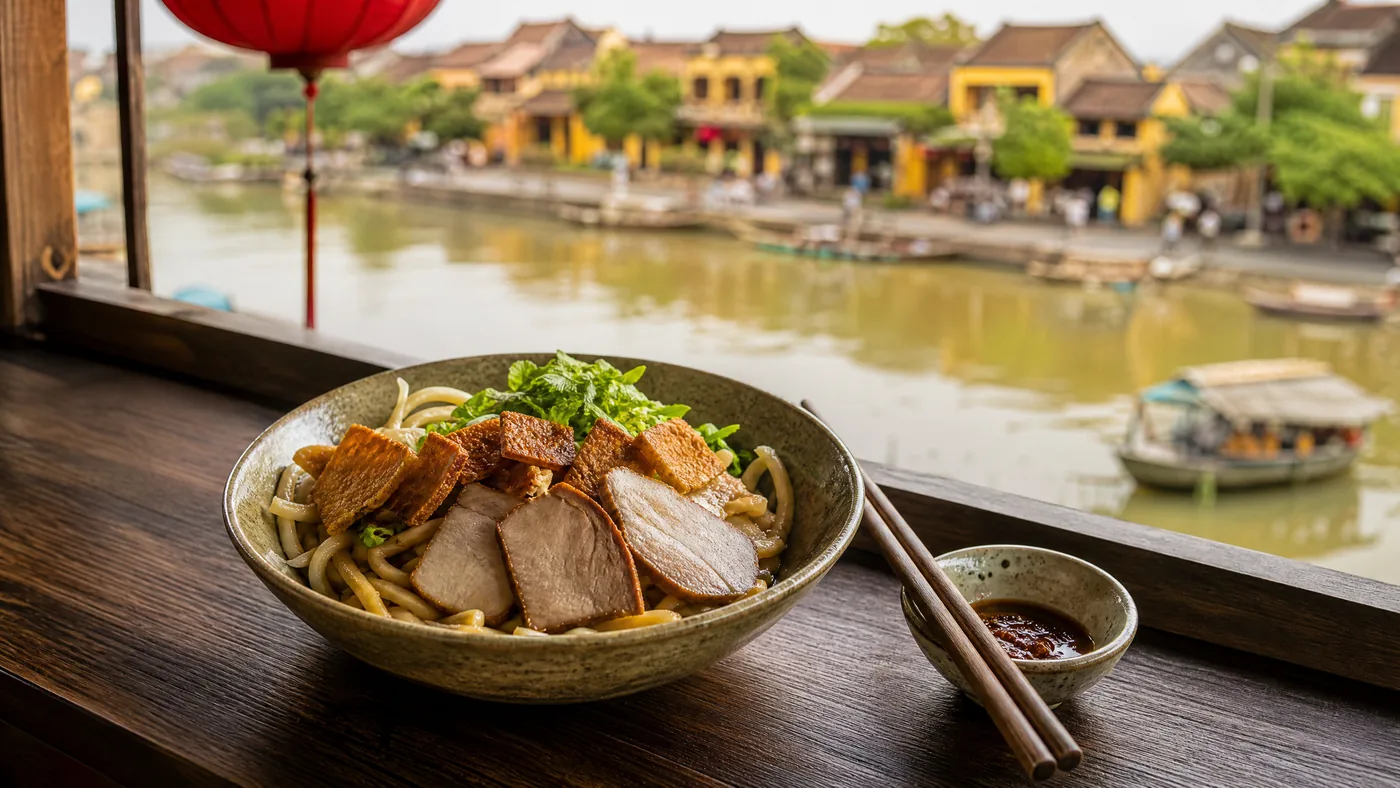
- Cao lau and mi Quang, the two local noodle bowls, both served with a handful of fresh herbs on top.
- Banh xeo, the crispy pancake you wrap in leaves before dipping.
- Tam huu, a Tra Que roll of herbs, pork and shrimp tied with a spring onion, named by both the Department and the Hoi An Center for Cultural Heritage Management.
On a class you will taste the difference raw. Several varieties have already disappeared, the Department notes, which is part of why the growing methods were listed as heritage.
Jim, on the Tra Que class: "My wife and I learned so much about Vietnamese cuisine and the beautiful organic ingredients, freshly picked from the ancient communal gardens just next door." (Aug 2026)
Why do Tra Que farmers use seaweed?
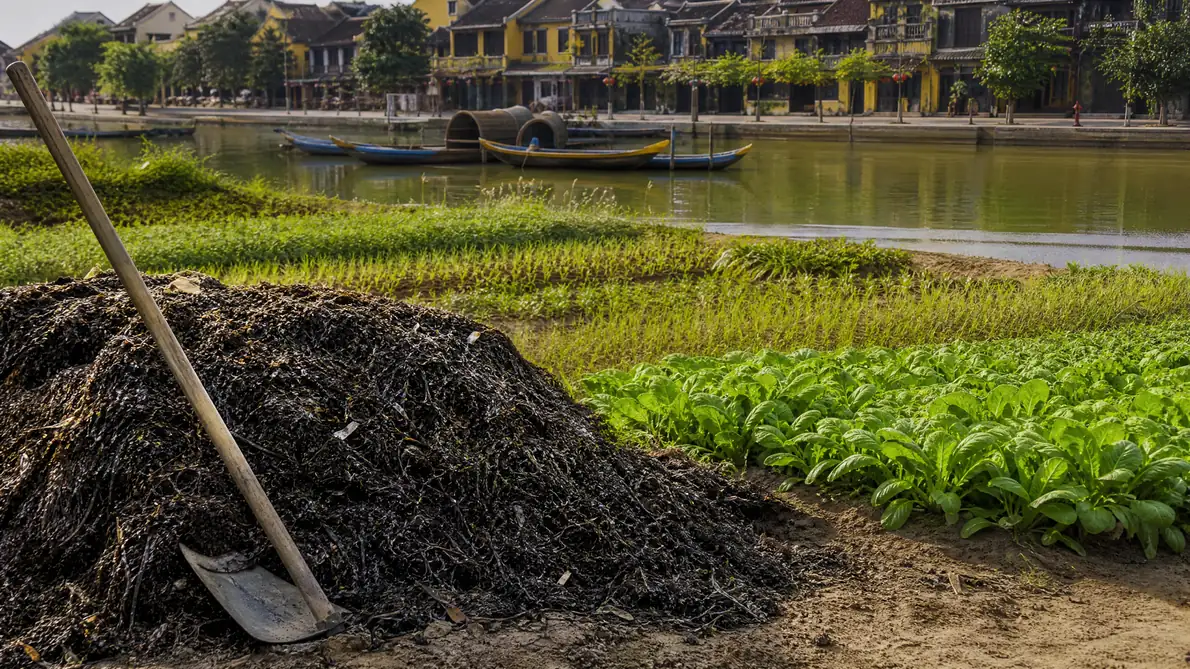
Because it feeds the beds: farmers spread soft seaweed from the Tra Que Lagoon as a green fertilizer, which the Hoi An Center for Cultural Heritage Management says gives the herbs their lush growth and rich fragrance.
This is the detail most visitors remember. Instead of relying on chemical fertilizer, growers collect seaweed and algae from the lagoon and the De Vong River and work it into the soil. UN Tourism adds that the village avoids machinery and chemical pesticides, and the Department lists the whole cycle as part of the heritage: choosing seed, sowing, tending, harvesting.
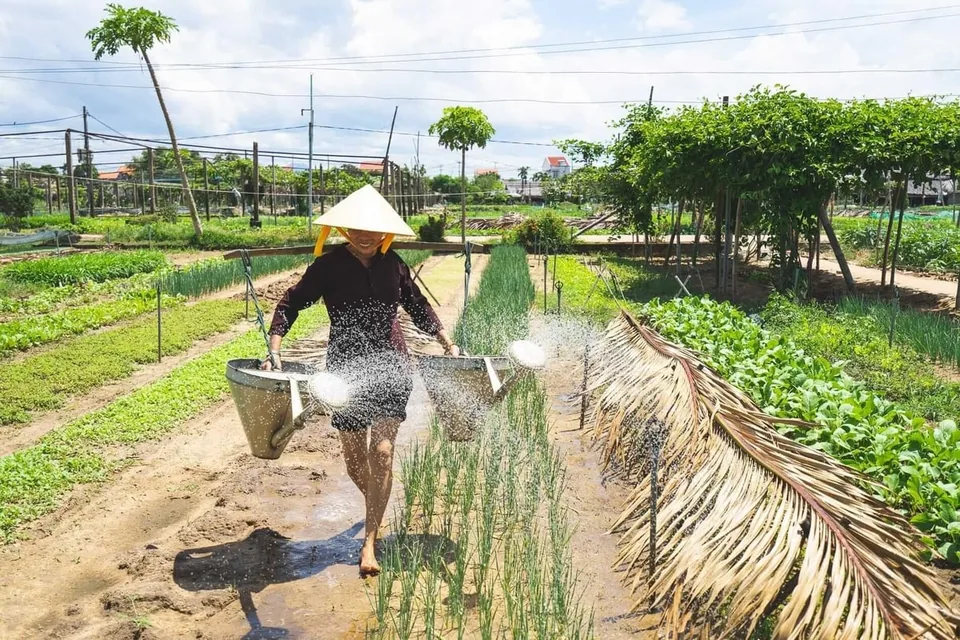
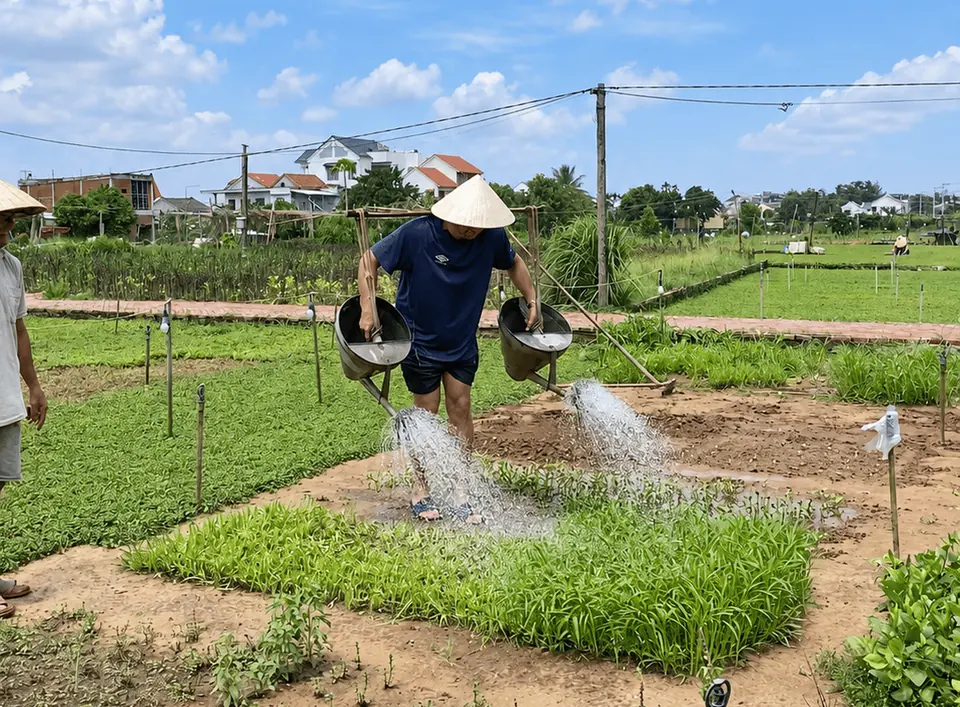
Watering is still done by hand, with two cans swinging from a shoulder pole. Tomas, on the Tra Que class, liked the chance to "check the fields behind the house by yourself after and see the local farmers watering or fertilising the soil." (Mar 2026)
How does a Tra Que cooking class work?
You meet in the village, walk the herb beds with your teacher, then cook 3 to 4 dishes at your own station and sit down to eat them. Expect 2.5 to 3 hours.
The two village classes on this site run in much the same order, per their listings:
- Arrive on your own. Neither includes hotel pickup.
- Walk the garden. The Tra Que class starts by seeing the herbs growing, with a welcome drink. The organic farm class opens with a farm tour to gather what you need for Tra Que spring rolls.
- Cook. The teacher demonstrates and you repeat. On the Tra Que class the chef preps some ingredients beforehand to keep it easy, and the menu can change with what is ready in the beds.
- Eat together. Everything you made, at one table with the rest of the group.
The farm class adds a certificate of completion. The Tra Que class hands you the recipes. Josefin, on the organic farm class: "We took a walking tour of the garden, everything was explained to us, and then we were allowed to help out." (Oct 2026)
New to cooking? Read our cooking class tips for what to wear and bring.
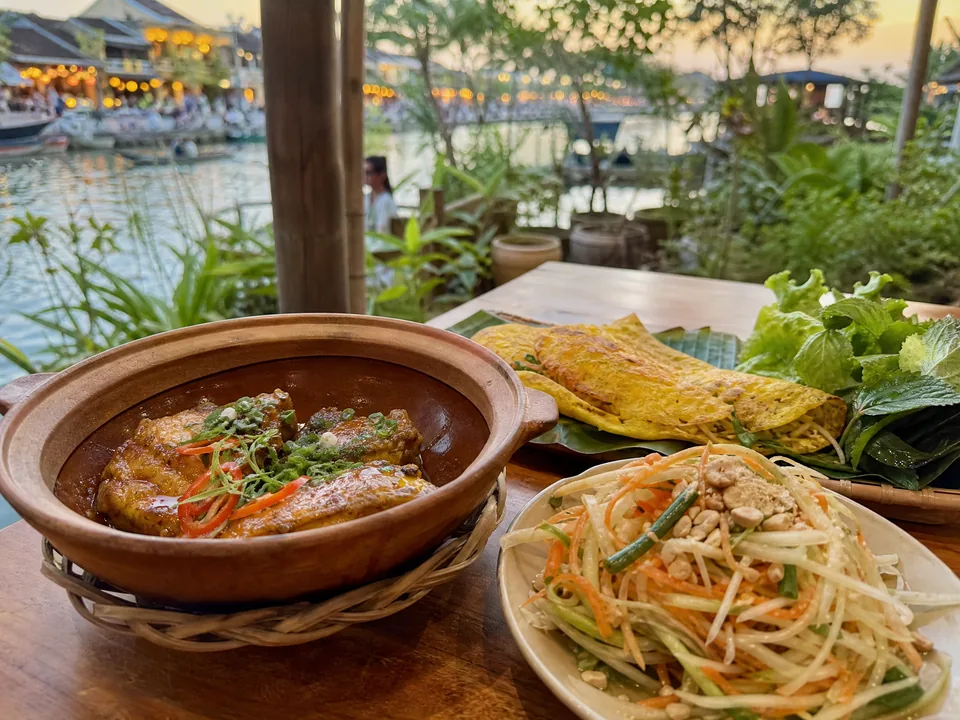
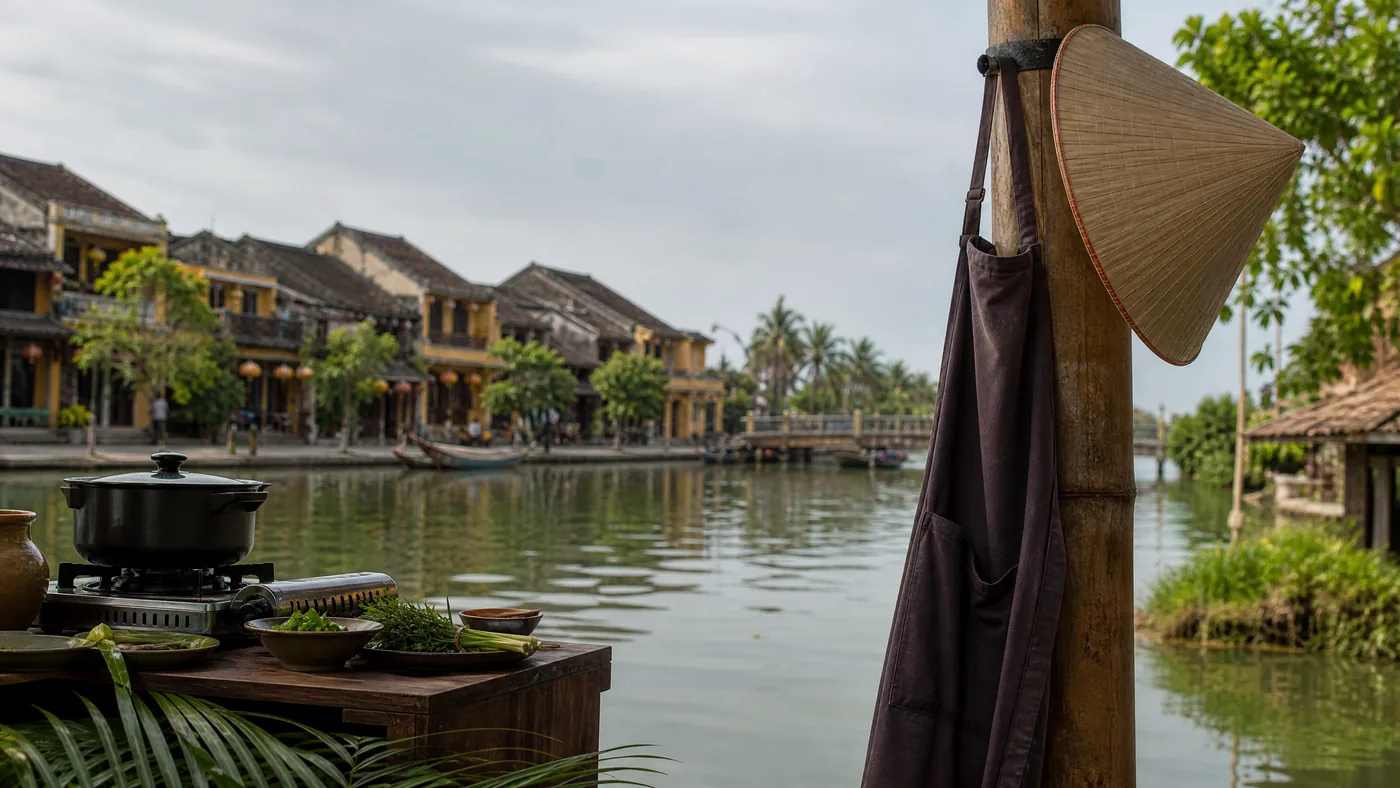
A walk through an organic farm in Tra Que, then Tra Que spring rolls, green papaya salad, fish in clay pot and banh xeo, with a certificate at the end.
Explore the organic farm class Tour detailsWhich Tra Que cooking class should I choose?
Pick the Tra Que class for a short morning with recipes to keep, the organic farm class for more time in the beds and a certificate, and the family class if you want to cook in a Tra Que herb garden in the evening.
The three side by side, per their listings:
| Tra Que herb village class | Organic farm class | Family class | |
|---|---|---|---|
| Kitchen | Tra Que Rural Charm Cooking Class | Lemon Basil Cookery & Restaurant | Evening class in a Tra Que herb garden; day classes in Cam Thanh |
| You cook | 4 dishes, incl. Hoi An spring rolls, pancakes and a village dish | Tra Que spring rolls, green papaya salad, fish in clay pot, banh xeo | 4 local dishes, like pancakes and spring rolls |
| Beyond the kitchen | The herb gardens and a welcome drink | A farm tour and a certificate | Welcome tea and a shared meal |
| Length | 2.5 hours | 3 hours | 2.5 to 3.5 hours |
| Pickup | No | No | No |
| Rating | 4.6 out of 5 from 127 reviews | 5.0 out of 5 from 84 reviews | 4.9 out of 5 from 583 reviews |
| From | $32 | $28 | $24 |
The family class lists its Tra Que session at 6pm and its Cam Thanh sessions at 10.15am and 4.15pm, so check which kitchen your time slot uses before you book. The Tra Que class asks for a cash surcharge on public holidays, per its listing.
Want the herb garden plus a basket boat? No single listing here does both. Our guide to choosing a class compares all 11.
How do you get to Tra Que from Hoi An?
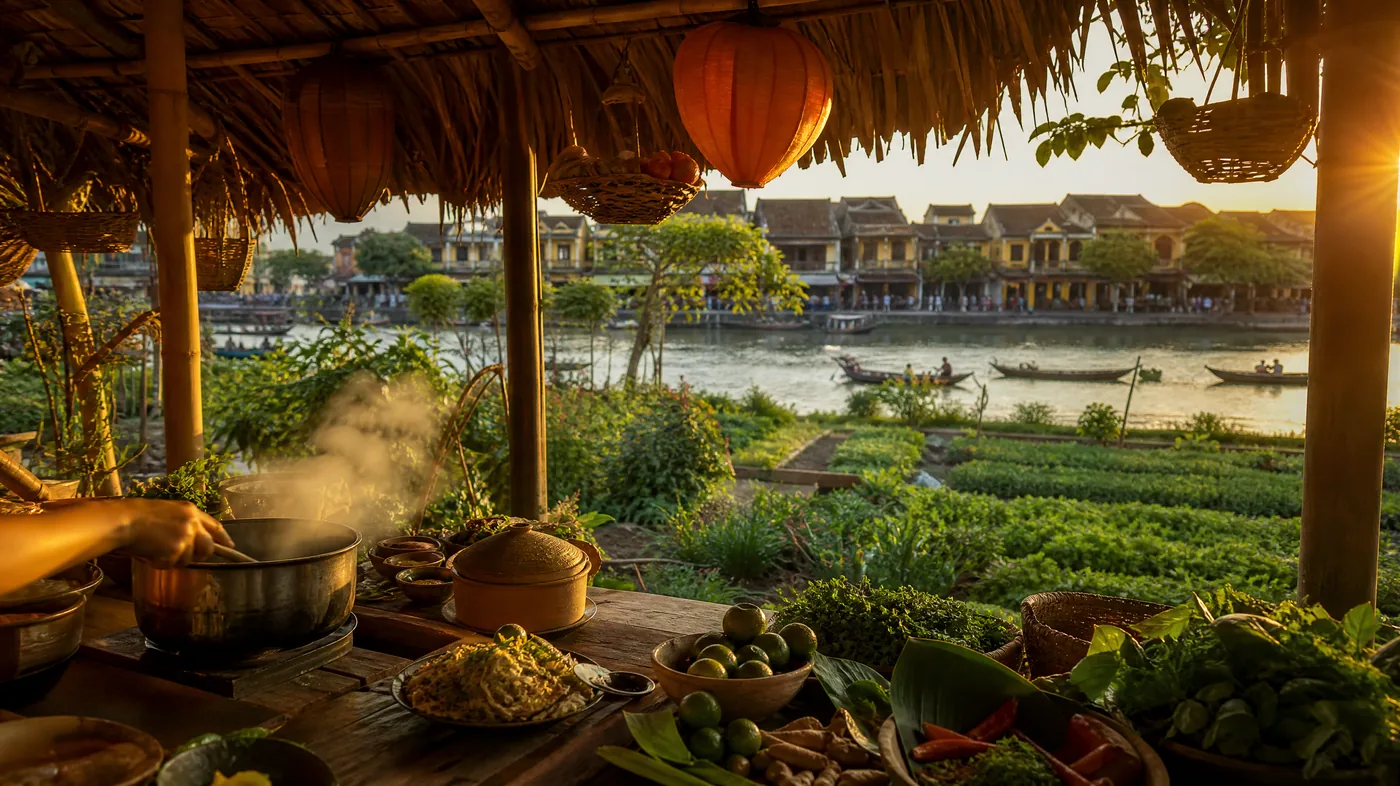
By bicycle, motorbike or taxi: the Da Nang Department of Tourism names all three, and the village is only about 2.5 km north of Hoi An's center.
A bicycle is the classic way, on flat roads past rice fields. None of the three classes above includes pickup, so plan the ride into your morning.
- Entry: for visitors walking the village on their own, the Department lists an entrance fee of about 35,000 VND per person, children under 6 free.
- Hours: 8am to 6pm daily, per the same page.
- Other things to do: the Department suggests "A Day as a Farmer" (preparing soil, sowing and watering with shoulder yokes), cycling the riverside, an old Cham stone well and cafes over the gardens.
Taxis: VNAT recommends metered taxis or ride-hailing apps such as Grab, Be and Xanh SM.
A short morning in the herb gardens: meet in Tra Que, walk the beds, cook and eat.
Check dates for the Tra Que herb village classWhen is the best time to visit Tra Que?
Early morning or late afternoon, when it is cooler and the farmers are working, per the Da Nang Department of Tourism. The growing season runs from early in the year to the end of summer.
Midday is hot and quiet in the beds. The months matter too:
- February to August: warm to hot and sunny in Hoi An, per VNAT, and the main growing season.
- September to January: rainy, cool and cloudy. From September to November Hoi An sees a lot of rain and some floods, VNAT says, so ask the class what happens if the beds are waterlogged.
- Cau Bong festival: the village's own festival falls on the 7th day of the first lunar month, just after the Lunar New Year, with seedling-planting and cooking contests, per the Hoi An Center for Cultural Heritage Management.
The rains are covered in our flood season post.
Frequently asked questions
How far is Tra Que from Hoi An Ancient Town?
About 2.5 km north of Hoi An's center, per the Da Nang Department of Tourism; UN Tourism gives about 3 km from the Ancient Town. Go by bicycle, motorbike or taxi.
Is there an entrance fee for Tra Que village?
The Da Nang Department of Tourism lists about 35,000 VND per person for visitors, with children under 6 free, and opening hours of 8am to 6pm.
Why are Tra Que herbs special?
The beds are fed with seaweed from the Tra Que Lagoon, and the growing methods are on Vietnam's National Intangible Cultural Heritage List since 2022.
Do the Tra Que cooking classes include hotel pickup?
No. The Tra Que class, the organic farm class and the family class all ask you to make your own way, per their listings.
Ready to book
Choose your class
Free cancellation up to 24 hours before on every option. Prices are from-prices in USD and move with the season.
Tra Que Herb Village Cooking Class
Cook among the herb beds of Tra Que, with recipes to keep
Cooking Class at an Organic Farm
A farm walk, four dishes and a certificate of completion
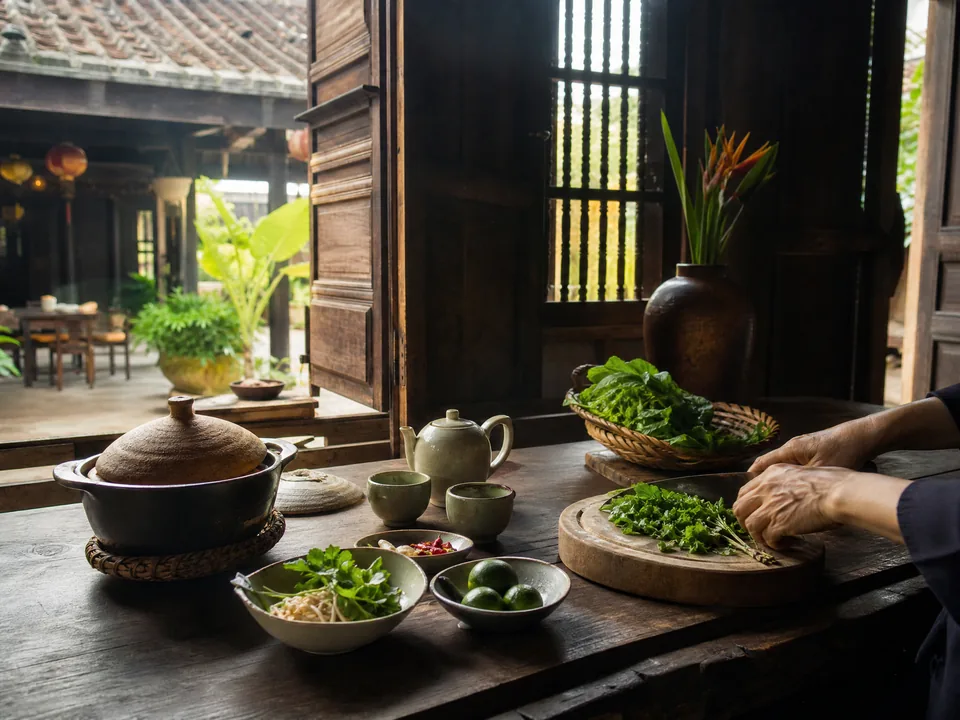
Traditional Cooking Class & Meal with a Local Family
- English-speaking chef
- Welcome tea
- All ingredients