Booking choice: The market, basket boat and cooking class, from $5 per person. Check dates Tour details
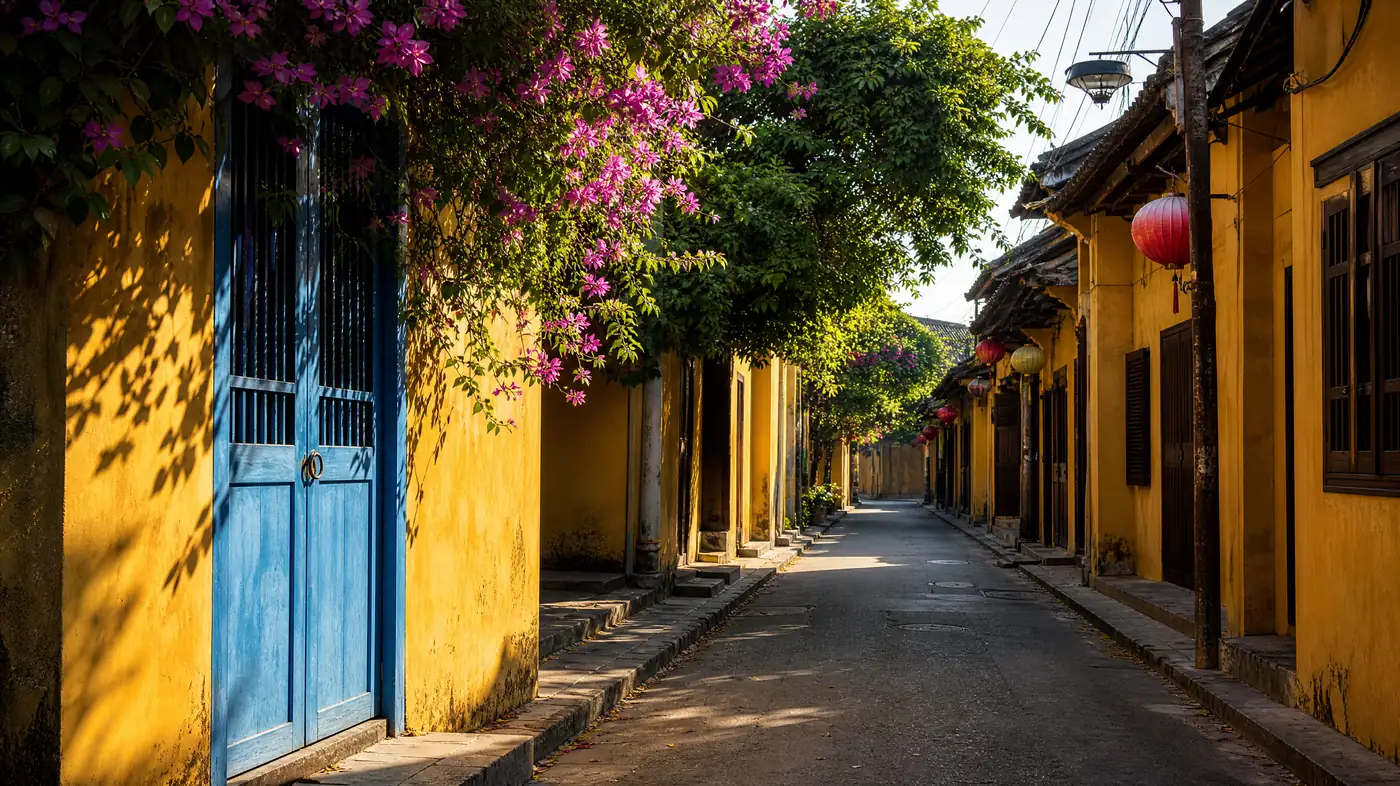
Hoi An Ancient Town is a small grid of tiled wooden shophouses, temples and assembly halls on the north bank of the Thu Bon River. It was a busy port from the 15th to the 19th century, then trade moved on and the town was left almost untouched. Today it is a UNESCO World Heritage Site, and since July 2025 it is part of Da Nang City.
Below: what UNESCO protects, the two ticket types announced on 28 January 2026, what to see, the Japanese Covered Bridge, the daily shows, the pedestrian hours, the lanterns on the river, a few easy mistakes to avoid, and how a class fits the day.
The quick answer
A ticket costs 80,000 VND (the townscape plus three sites) or 120,000 VND (the townscape, a museum and four sites), and one ticket covers your stay for up to 3 days. Children under 16 do not need one. The old town is for pedestrians from 9am to 9.30pm in summer and 9am to 9pm in winter. The market, basket boat and cooking class starts with a walk to Hoi An Market and leaves your afternoon free for the old town. Its from-price of $5 is for the lowest-priced option; the full market, boat and cooking day costs more, so check the options on the listing.
What is Hoi An Ancient Town famous for?
For being an exceptionally well-preserved South-East Asian trading port of the 15th to 19th centuries, inscribed by UNESCO as a World Heritage Site in 1999.
UNESCO's description gives the numbers: 30 ha of protected town inside a 280 ha buffer zone, and 1,107 timber-frame buildings. They include temples and pagodas, family cult houses, an open market and a ferry quay, set in tight rows along narrow streets. The houses front the street for customers and back onto the river, where boats once loaded and unloaded.
- Why it survived: Hoi An's trade declined in the later 19th century, so nobody rebuilt the wooden town in modern materials.
- Whose influence: local culture mixed with Chinese and Japanese traders, with later European touches.
- Where: on the north bank near the mouth of the Thu Bon River, a short ride from the coconut forest at Cam Thanh and the herb beds of Tra Que.
It is still lived in. Shops open, families cook, and the market sells the same herbs your class will use.
How much is the Hoi An Ancient Town ticket in 2026?
80,000 VND or 120,000 VND, per the announcement of 28 January 2026. Both cover the townscape and one landmark; the dearer one adds a museum and an extra site.
The two options, as the Hoi An Center for Cultural Heritage Management and the Da Nang Department of Tourism publish them:
| 80,000 VND ticket | 120,000 VND ticket | |
|---|---|---|
| Townscape | Yes | Yes |
| Landmark | The Japanese Covered Bridge or Quan Cong Temple | The Japanese Covered Bridge or Quan Cong Temple |
| Museum | No | One museum |
| Other sites of your choice | 2 | 3 |
| Performances and Night Town activities | Included | Included |
| Valid | Your whole stay, up to 3 days | Your whole stay, up to 3 days |
| Under 16 | Free | Free |
- Keep the stub. You show it to re-enter, even after you have used every site.
- Groups of 8 or more get a free guide for the old town and the ticketed sites.
- Buy before you enter the old town, the announcement says.
The ticket changes are covered in our 2026 ticket post.
What is a must see in Hoi An?
The Japanese Covered Bridge, one of the Chinese assembly halls such as the Fujian Assembly Hall, an old merchant house like Tan Ky, Hoi An Market in the morning and the river at night.
Our shortlist for a first visit, with what the official pages say:
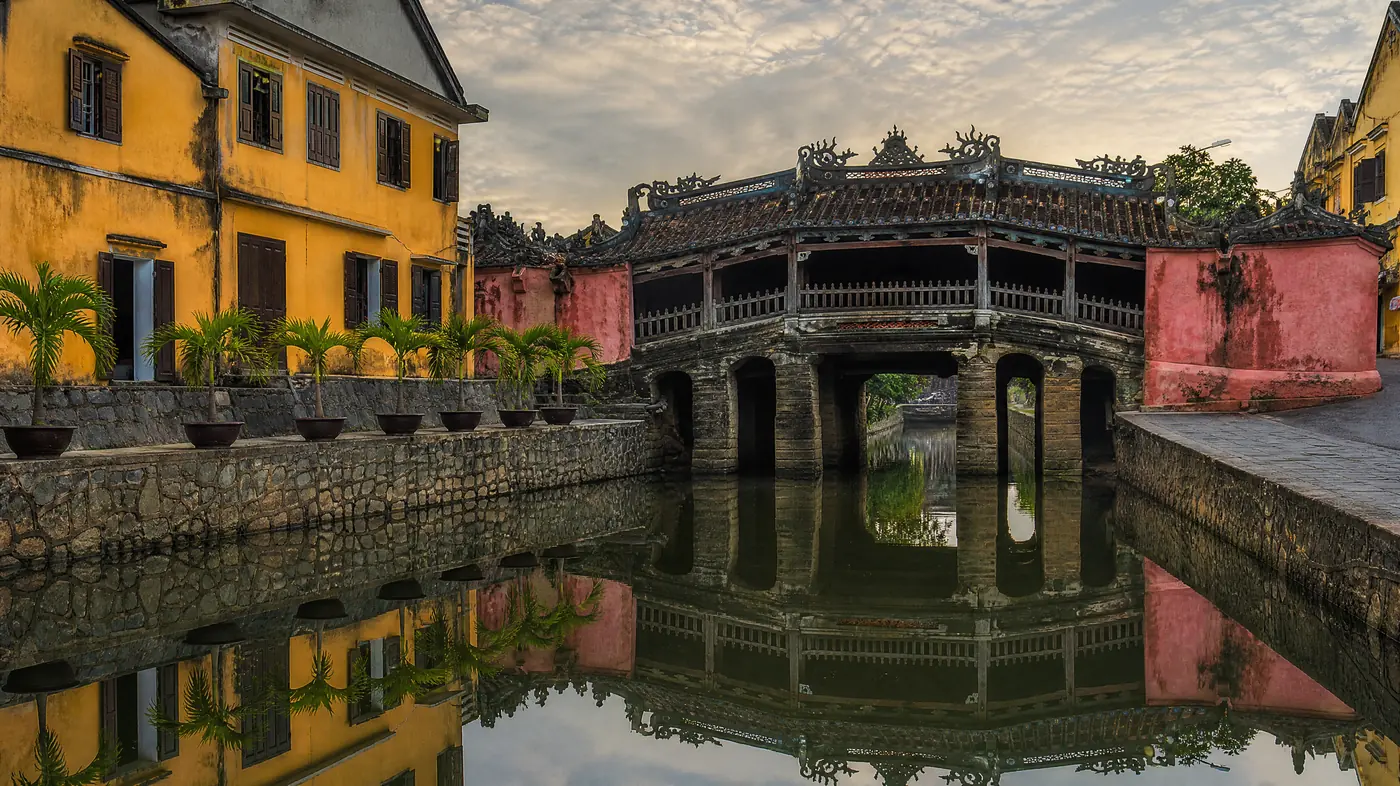
- The Japanese Covered Bridge. The town's emblem, with a small pagoda on it. More below.
- The Fujian Assembly Hall, 46 Tran Phu Street. Fujian merchants bought the site in 1697 and rebuilt it in brick and tile in 1757. It honors Thien Hau, goddess of the sea. Look up: giant incense coils hang from the ceiling carrying written wishes, and each burns for weeks, per the Da Nang Department of Tourism.
- Tan Ky Old House on Nguyen Thai Hoc Street, a late 18th-century merchant home kept by one family for seven generations, mixing Vietnamese, Chinese and Japanese styles.
- Hoi An Market early in the day, when the produce comes in. The market class walks you through it.
- The riverfront after dark, for the lanterns.
Each ticketed site uses one slot on your ticket, so choose two or three that interest you and save the rest for another day of the 3.

Can you go inside the Japanese Covered Bridge?
Yes. It reopened after a restoration that ran from 28 December 2022 to the end of July 2024, and it is one of the two landmarks you can pick on either ticket.
The Hoi An Center for Cultural Heritage Management held the inauguration on 3 August 2024 and says the relic has existed for 400 years. VNAT traces it to around 1593, when the Japanese built a bridge to link their quarter to the Chinese one; UNESCO dates the wooden bridge with its pagoda to the 18th century.
- Ticket: choose it as your landmark (the other choice is Quan Cong Temple).
- Best light: early morning, before the crowds. VNAT says mornings are quiet and late afternoons and early evenings busy.
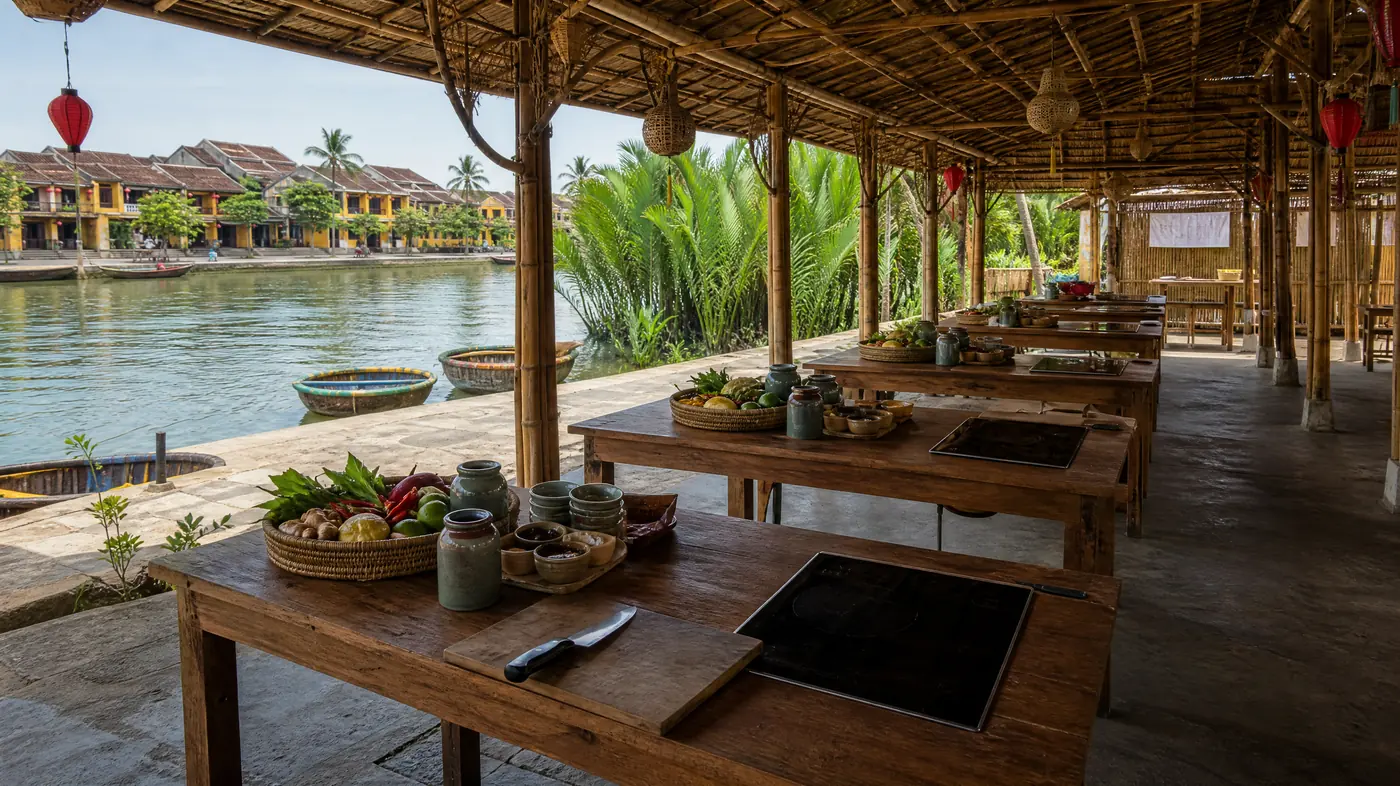
A morning at the market, a basket boat in Cam Thanh and a class, with the afternoon free for the old town.
Check dates for the market, basket boat and cooking classWhat time does Hoi An Ancient Town open?
The streets are always open, but they are pedestrian-only from 9am to 9.30pm in summer and 9am to 9pm in winter. Ticketed shows run at fixed times each day.
The daily schedule from the 2026 announcement:
- Pedestrian hours, old town: 9am to 9.30pm in summer, 9am to 9pm in winter.
- Phan Chau Trinh Street: pedestrian from 5.30pm to 9.30pm in summer, 5.30pm to 9pm in winter.
- Traditional art performances: 10.15am, 3.15pm and 4.15pm daily. Since 7 March 2026 they are at Hoai River Square, 01 Cao Hong Lanh Street (second-floor hall), per the Da Nang Department of Tourism.
- Japanese tea ceremony: 9.30am and 4.30pm daily at the Japanese culture exhibition house, 06 Nguyen Thi Minh Khai Street.
- Night Town: bai choi folk games, folk singing and street music on traditional instruments in the evenings.
All of these are on the ticket. VNAT's advice for walking is simple: avoid the harsh midday sun.
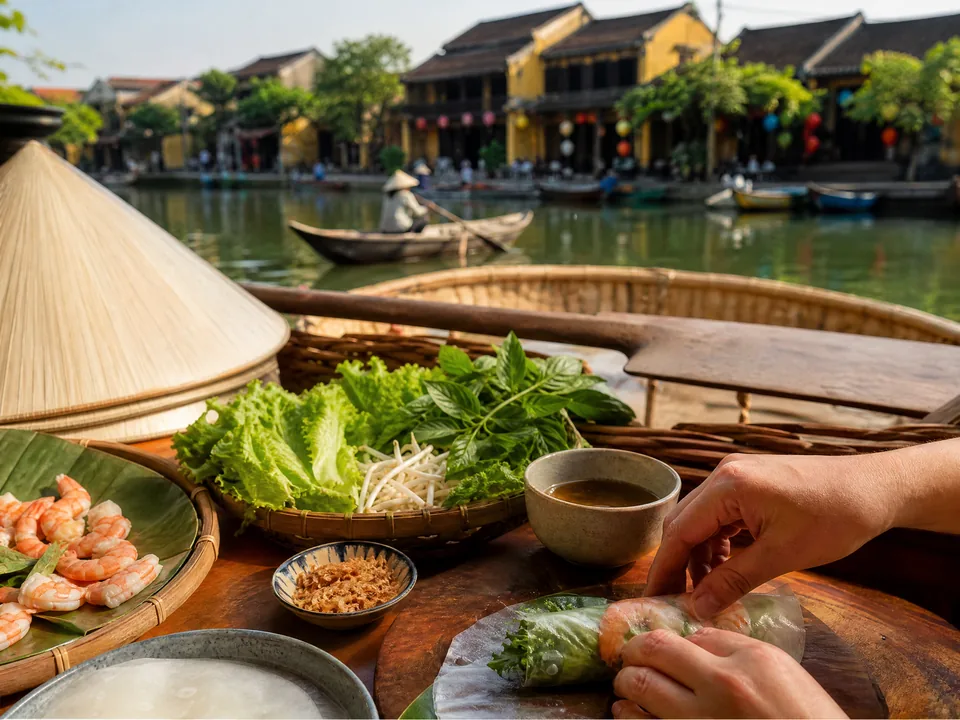
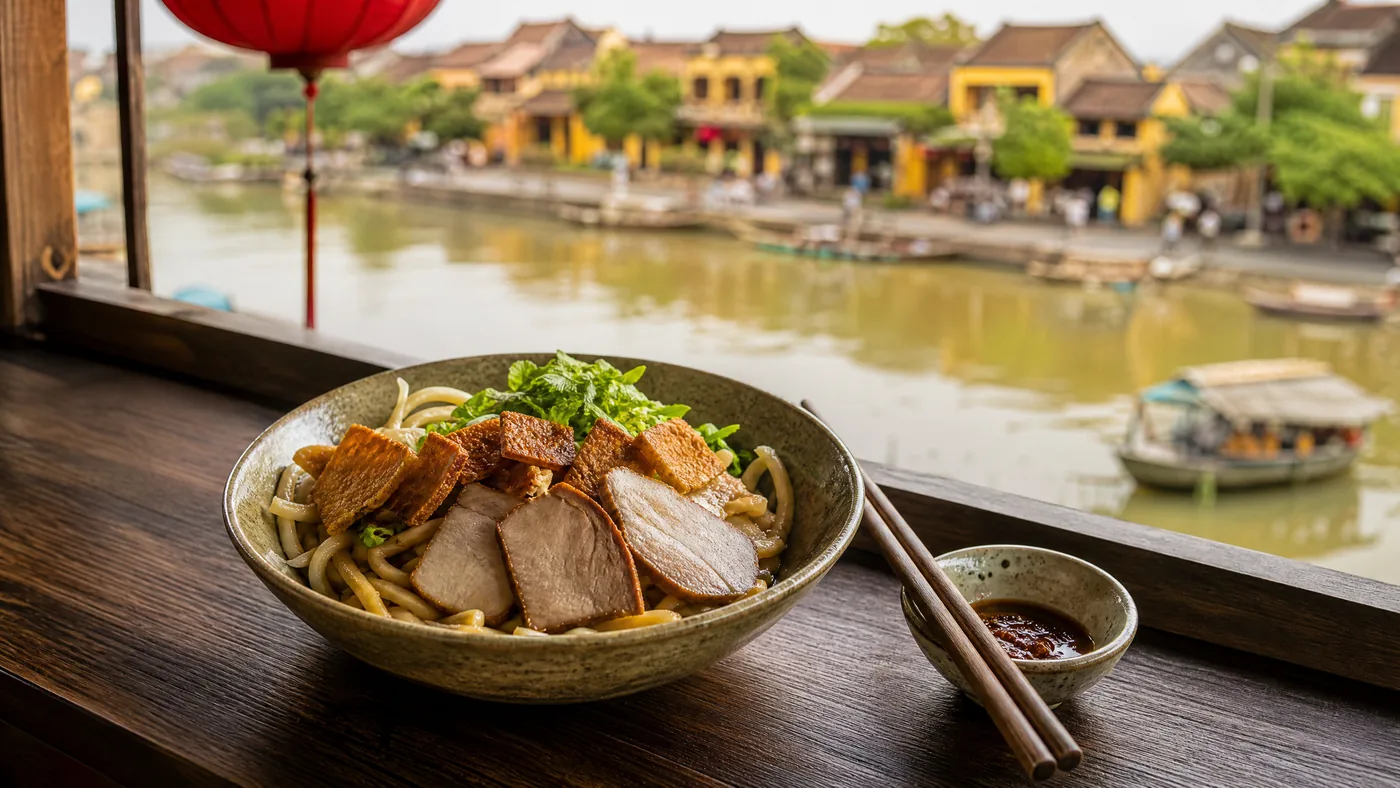
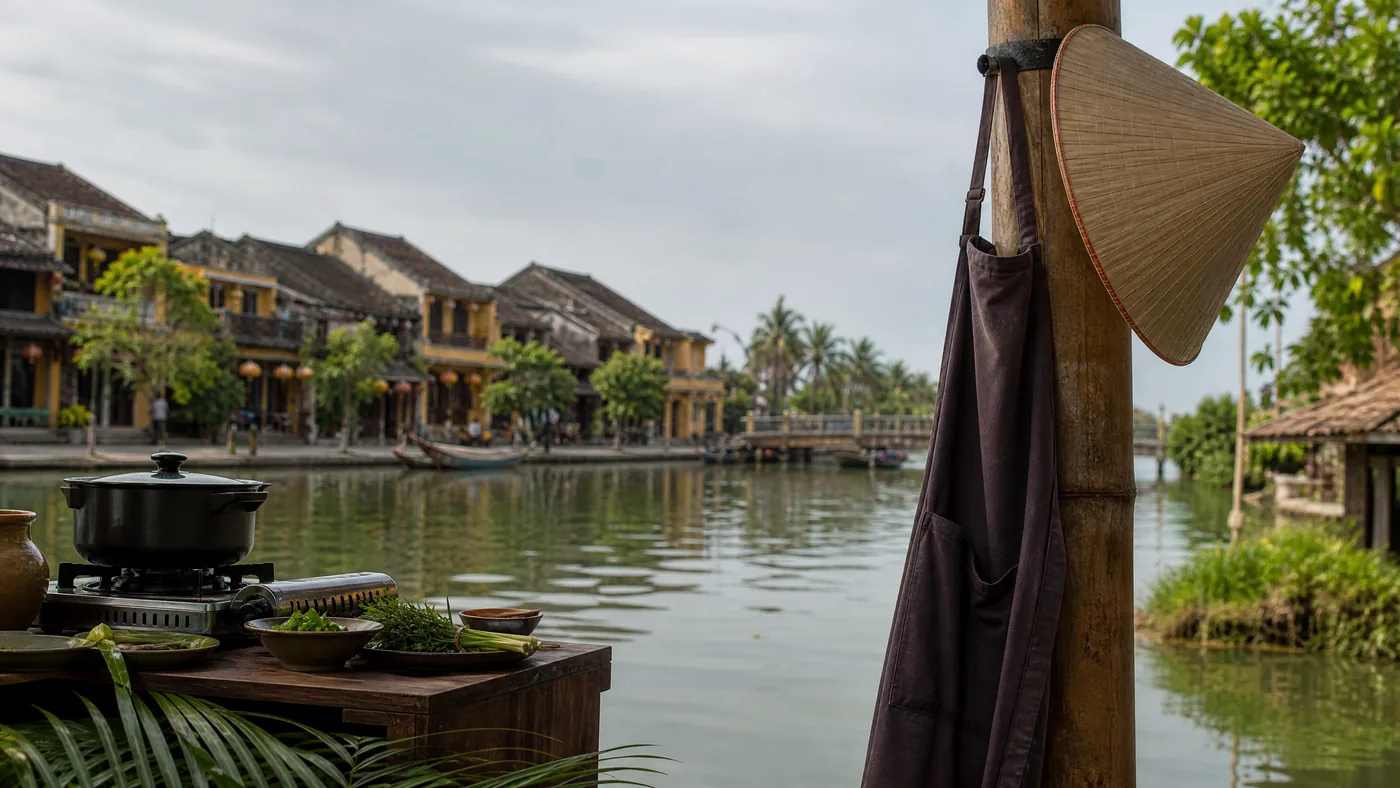
The classic Hoi An morning: a walk to the market with your guide, a basket boat into the Cam Thanh coconut forest with a little crab fishing, then a class with local chefs.
Explore the market, basket boat and cooking class Tour detailsWhere can you see the lanterns on the river in Hoi An?
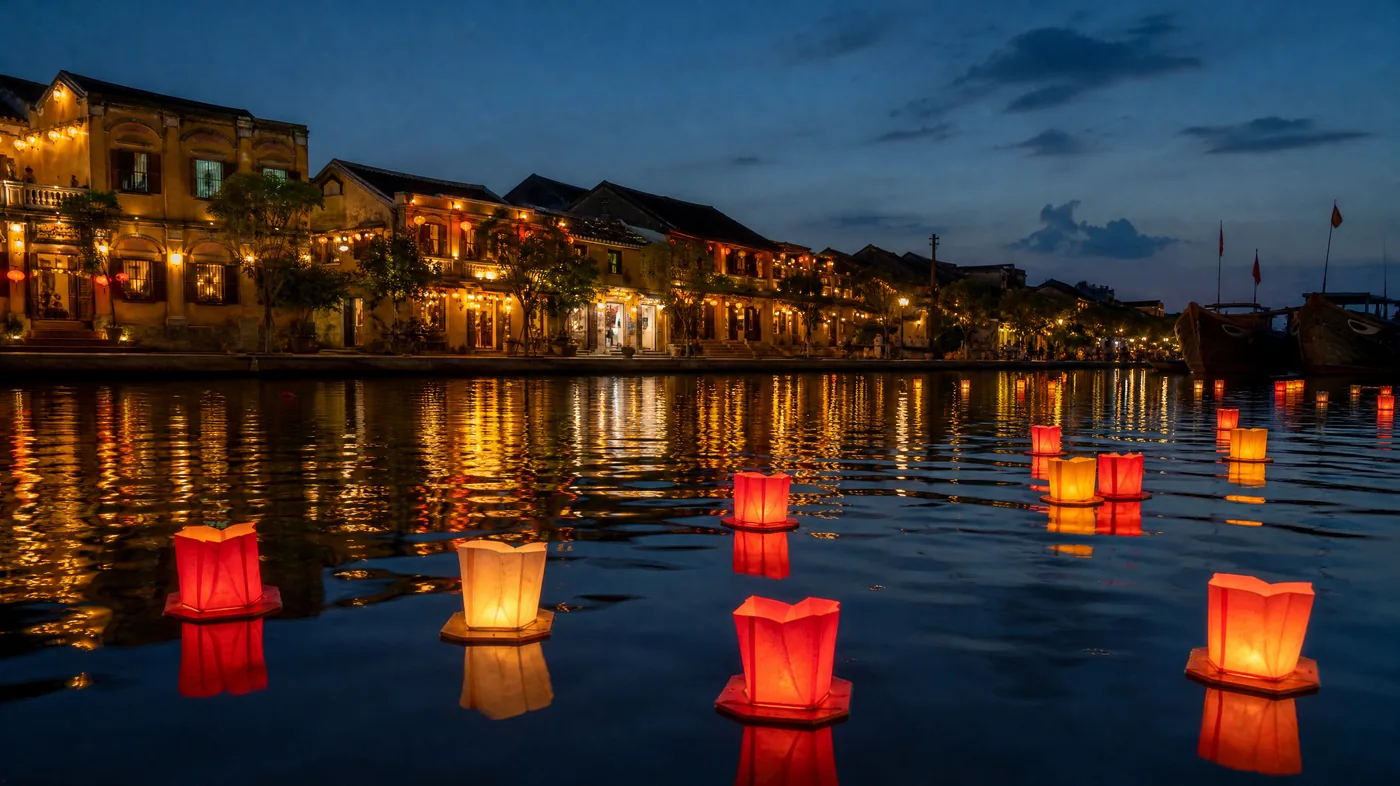
Along the riverfront of the old town after dark, where lanterns are set adrift for good luck. You can watch from the bank or take a small boat and release one yourself.
VNAT's words: "Find a spot by the river, where lanterns are cast adrift to bring good luck", or "hop onto a boat and drop a lantern as you make a wish of your own." It also describes a lantern festival on the 14th day of every lunar month, when the moon is full.
- When: after dark, within the pedestrian hours above.
- Make your own: The class with coffee and lantern making and the lantern workshop let you build a silk lantern to take home. On the workshop listing the lantern comes only with the full option (market, boat, class and lantern); its from-price is for the lowest-priced option, which drops the lantern, so check the options on the listing.
- The craft: Vietnam Law Magazine, citing the Hoi An Center for Cultural Heritage Management, traces the first lanterns to the 17th-century port of Faifo: bamboo frames covered in silk or satin. Modern ones fold flat for the suitcase.
Ashley, on the lantern making class: "The cooking class and lantern making was so much fun." (Nov 2026)
What are the biggest mistakes visitors make in Hoi An?
Throwing away the ticket stub, dressing for the beach at temples, planning a boat trip deep in the flood months without a plan B, and forgetting that much of Vietnam closes for Tet.
Small things, all easy to avoid:
- Losing the stub. One ticket covers up to 3 days, but only if you keep it.
- Bare shoulders in a temple. VNAT asks visitors to cover shoulders and knees at pagodas, temples and religious sites, and to remove hats and shoes where asked.
- Ignoring the season. September to January is rainy and cool; September to November brings a lot of rain and some floods, VNAT says. Book classes with free cancellation (every class here cancels free up to 24 hours before) and ask the operator about the boat parts in high water.
- Tet. VNAT warns that over the Lunar New Year, usually in January or February, many businesses, transport services and restaurants close for several days. See our Tet 2027 post.
- Unmetered taxis. VNAT recommends meter taxis or apps such as Grab, Be or Xanh SM.
How does a cooking class fit a day in Hoi An?
Cook in the morning and see the old town in the afternoon and evening, or take an afternoon class and walk out to the lanterns after dinner. A 3-day ticket makes splitting easy.
Three patterns that work, per the listings:
- Morning class, old town after: the market, basket boat and cooking class begins with a walk of about 25 minutes to Hoi An Market, then the boat and a class of about 1.5 hours, per its listing. Choose the full option for all three.
- Old town in the morning, class later: the cooking class with pickup lists Hoi An sessions at 10.30am and 4.30pm, and the family class cooks at 10.15am and 4.15pm in Cam Thanh or 6pm in Tra Que.
- All in one half day: the lantern making class adds a basket boat, coffee and a lantern, with hotel pickup.
Then eat your way back into town: our Hoi An food guide lists the dishes to try, and the basket boat guide covers the coconut forest.
Cook 4 dishes in 2 hours with hotel pickup, and keep the rest of the day for the old town.
Check dates for the cooking class with pickupFrequently asked questions
How much is the Hoi An Ancient Town ticket in 2026?
80,000 VND for the townscape plus three sites, or 120,000 VND for the townscape, a museum and four sites. One ticket covers up to 3 days; under 16 is free.
Is Hoi An Ancient Town free at night?
No. The 2026 ticket covers the townscape, the sites and the Night Town activities, and you keep the stub to re-enter during your stay.
What are the pedestrian hours in Hoi An Ancient Town?
9am to 9.30pm in summer and 9am to 9pm in winter, per the Hoi An Center for Cultural Heritage Management.
Is the Japanese Covered Bridge open?
Yes. Its restoration ended in July 2024 and it was inaugurated on 3 August 2024. Pick it as the landmark on your ticket.
Ready to book
Choose your class
Free cancellation up to 24 hours before on every option. Prices are from-prices in USD and move with the season.
Market Tour, Cooking Class & Basket Boat
- English-speaking guide
- Coconut forest entry ticket
- Ingredients and the meal you cook
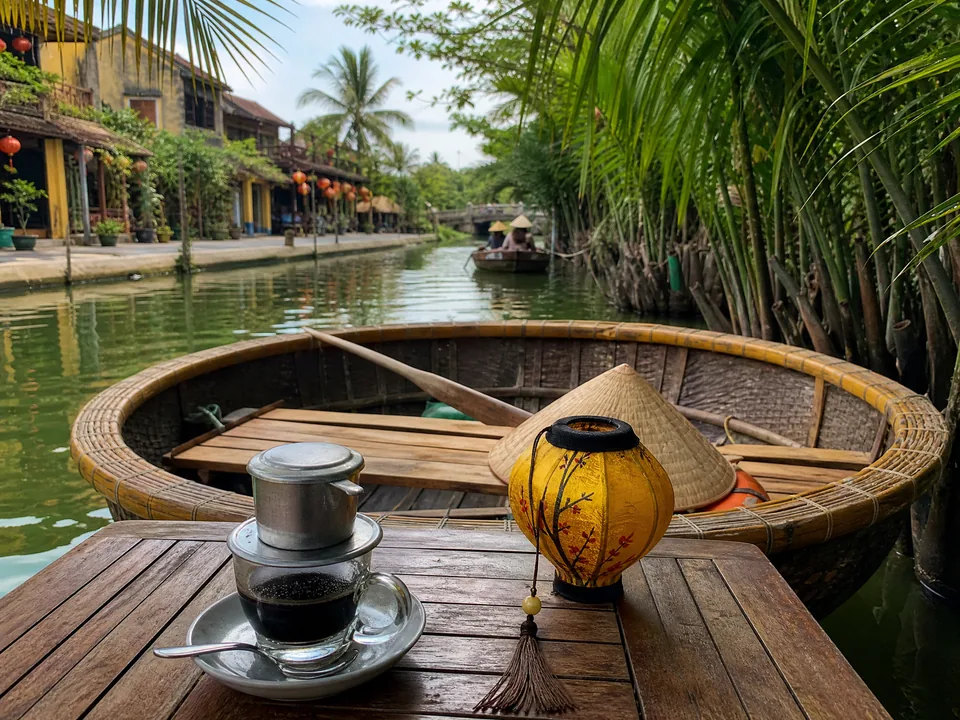
Cooking Class, Basket Boat, Coffee & Lantern Making
- Hotel pickup and drop-off in Hoi An
- Basket boat ride and entry fees
- Cooking class and meal
Vietnamese Cooking Class with Transport from Hoi An or Da Nang
Four dishes in two hours, no market or boat, good with kids