Booking choice: The family cooking class, from $24 per person. Check dates Tour details
Ask anyone in Hoi An what to eat and you get the same short list, in roughly the same order. Cao lau, mi Quang, com ga, banh mi, the white rose dumplings, banh xeo. Most of it is cheap, most of it is street food, and a good part of it ends up on the menu of a cooking class.
This guide takes the dishes one by one, then the questions people ask about eating in Vietnam: is pho really eaten there, what is breakfast, what does a family dinner look like. Sources are named in plain text: the Vietnam National Authority of Tourism (VNAT), the Da Nang Department of Tourism, Wikipedia and Tuoi Tre News. Class menus come from each listing.
The quick answer
Hoi An's famous food is cao lau, chewy noodles with pork and herbs that local legend ties to the old Ba Le well. Close behind: mi Quang, com ga (chicken rice), banh mi, the white rose dumplings and banh xeo. Pho is eaten all over Vietnam, mostly for breakfast, per VNAT. The lantern making class cooks cao lau, and the market class cooks pho, banh xeo, banh cuon and che.
What is the famous food in Hoi An?
Cao lau first, the dish VNAT calls "Hoi An in a bowl". Then mi Quang, com ga, banh mi, the white rose dumplings and banh xeo, all easy to find in and around the Ancient Town.
VNAT's guide to the food of Hoi An adds a few you might not know. Banh uot thit nuong is lemongrass grilled pork rolled in wet rice paper with salad, herbs, cucumber and star fruit, dipped in a sauce of soybean paste, peanuts and sesame. Bun thit nuong is grilled pork over rice vermicelli, a quick lunch on a hot day. And banh xoai, the "mango cake" sold near the Japanese Covered Bridge, contains no mango at all: it is glutinous rice flour with crushed peanuts and brown sugar.
Behind all of it sits nuoc mam, fish sauce, the most common condiment in Vietnamese cooking (Wikipedia), and a pile of fresh herbs on every table. You will make a dipping sauce from it on almost any class.
What is cao lau, and why is it hard to find outside Hoi An?
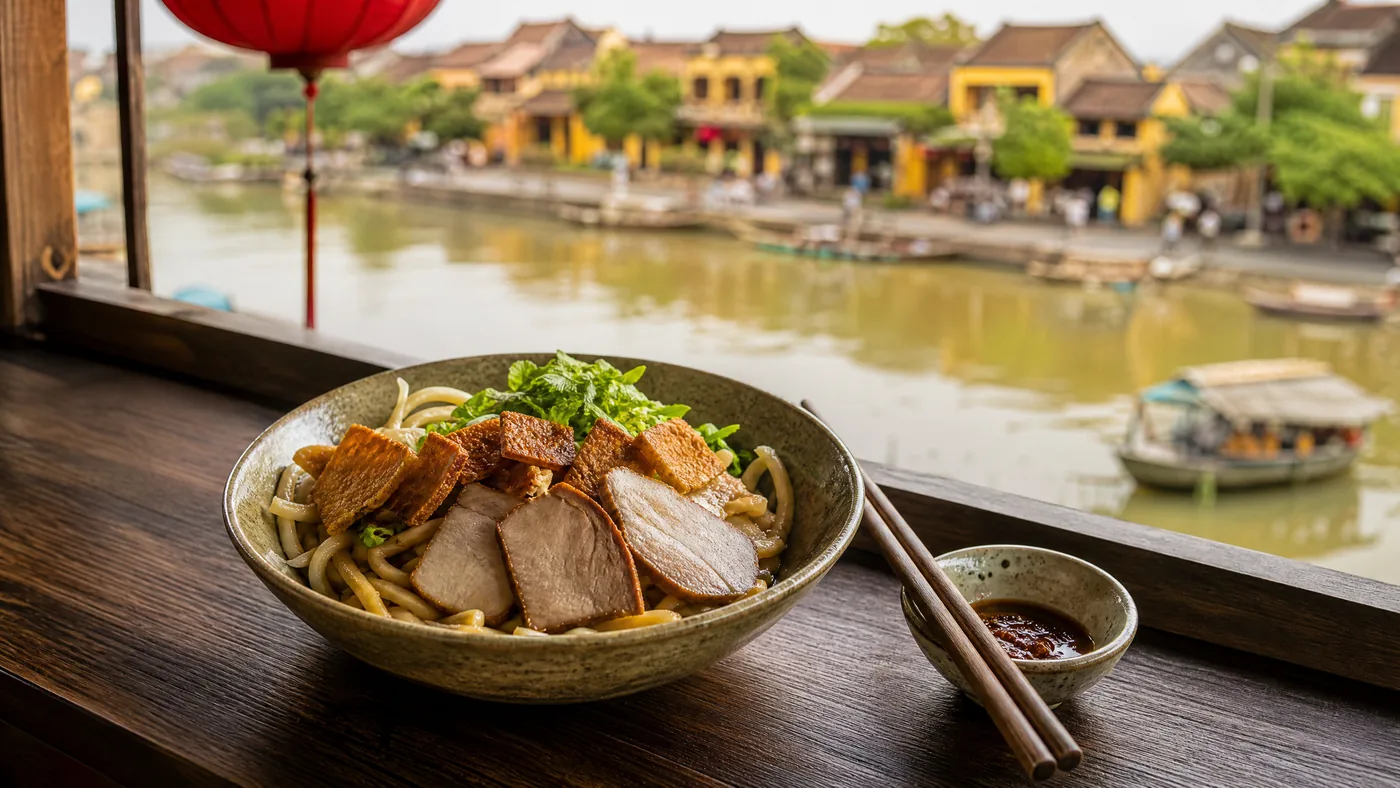
Cao lau is pork and greens on rice noodles soaked in lye water, which gives them their chewy texture and color. Local legend says the real thing needs water from the old Ba Le well, so it rarely leaves Hoi An.
Per Wikipedia, the legend goes further: the lye should come from the ashes of plants from the nearby Cham Islands. VNAT names the wood ash of melaleuca trees from the islands. The pork is marinated with five-spice, garlic and soy sauce, close to char siu, and some of the raw noodles are cut into squares and fried until crisp to go on top. A small splash of broth, just enough to wet the noodles, then lettuce, bean sprouts and herbs such as mint, perilla and lemon basil, with lime and chili on the side.
Mix the bowl before you eat. It is served warm rather than hot, and the crunch of the croutons against the springy noodles is the point. On this site, the lantern making class cooks cao lau, which its listing calls Hoi An's signature dish.
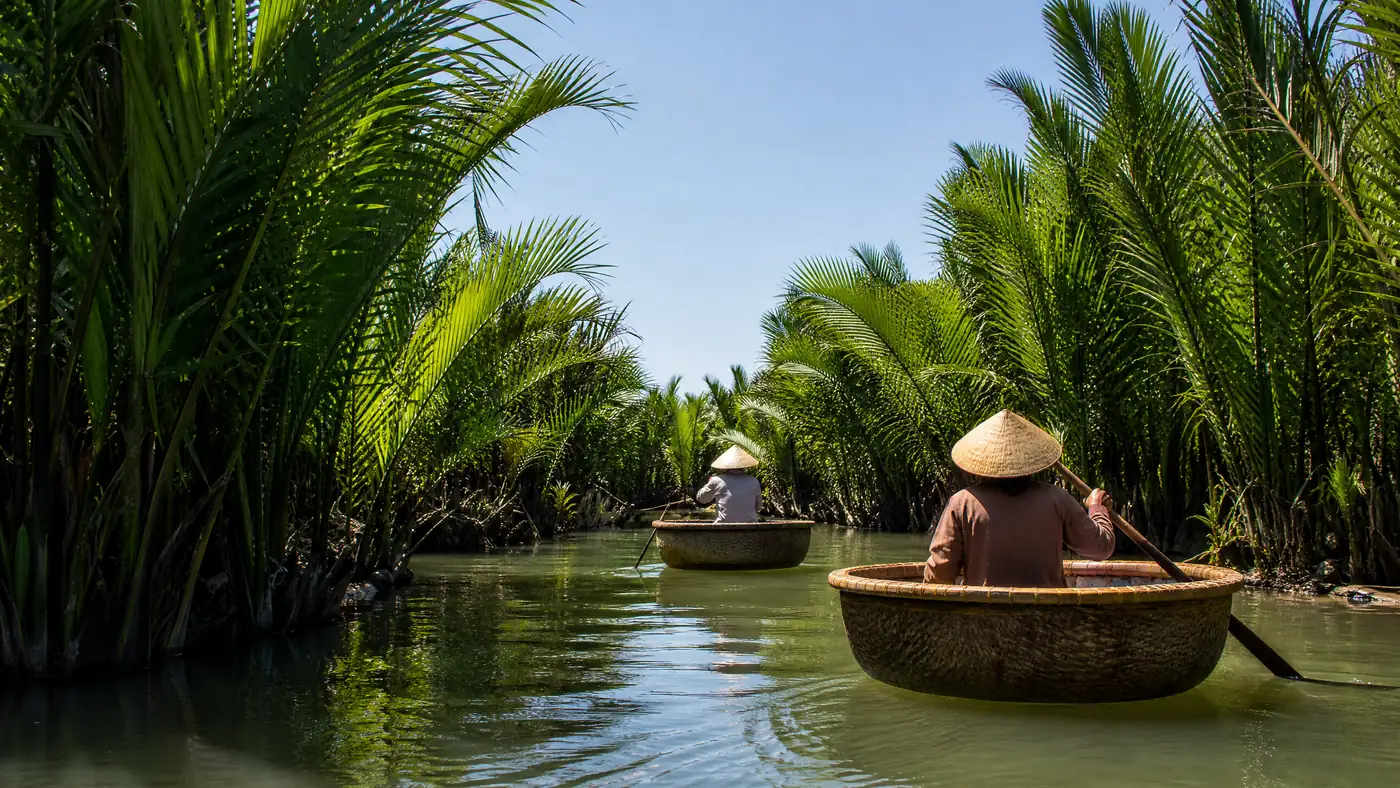
Cook cao lau, banh xeo, fried spring rolls and wontons, after a basket boat and a lantern workshop.
Check dates for the class with coffee and lantern makingWhat is mi Quang?
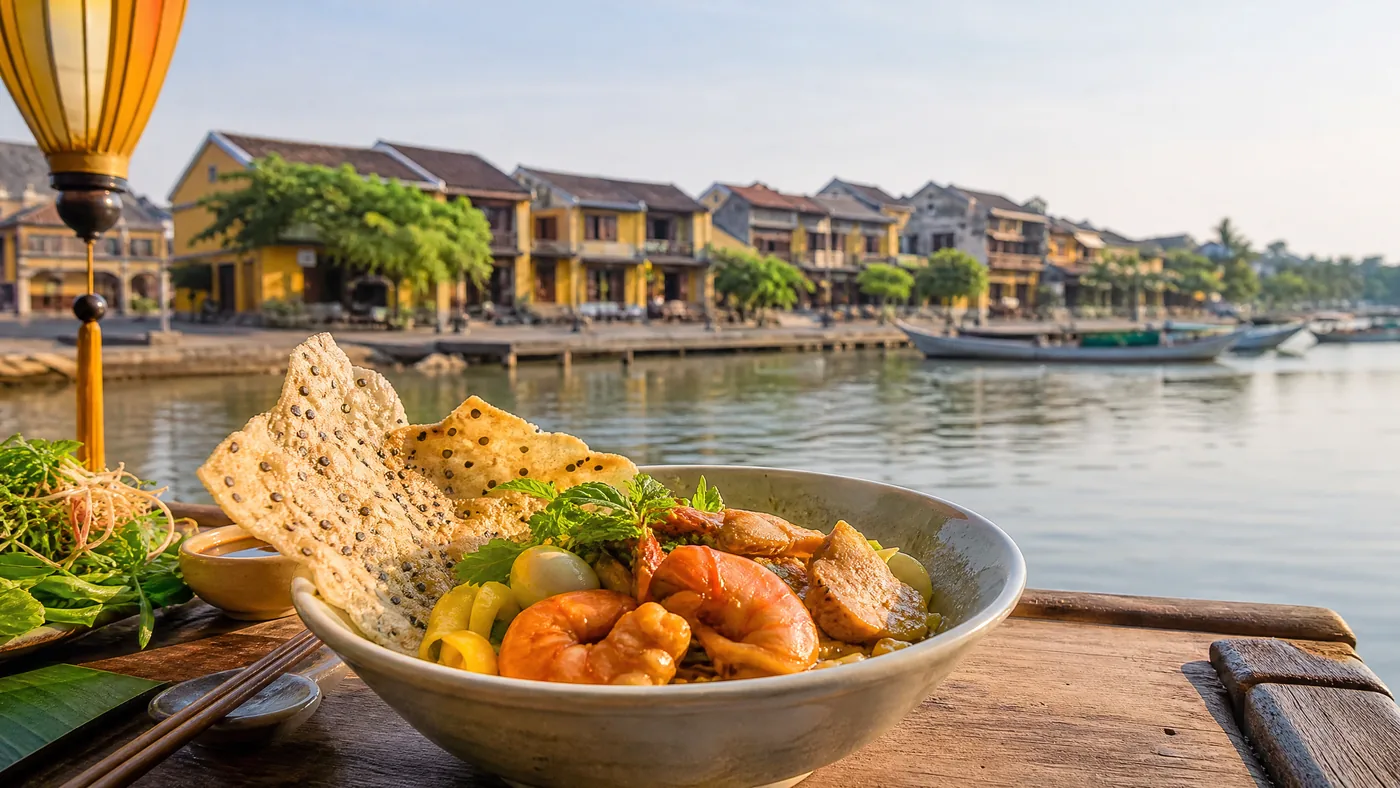
Mi Quang is central Vietnam's own noodle dish: wide, turmeric-tinted rice noodles with shrimp, pork or chicken, only a little broth, peanuts and a toasted sesame rice cracker.
It comes from the Quang region, the former Quang Nam Province and Da Nang, and is eaten at any time of day (Wikipedia). VNAT's guide to Da Nang describes the bowl well: rice noodles over raw lettuce and sprouts, crispy rice crackers, sliced banana blossom and quail eggs, then a ladle of peanut-y broth. In August 2024 Vietnam's Ministry of Culture, Sports and Tourism added mi Quang to the national intangible cultural heritage list, per Wikipedia citing Viet Nam News.
Break the rice cracker over the top and stir. In class, the cooking class with pickup teaches mi Quang at its Da Nang kitchen on Monday, Wednesday and Friday, per the listing's menu.
Where do white rose dumplings and Hoi An chicken rice come from?
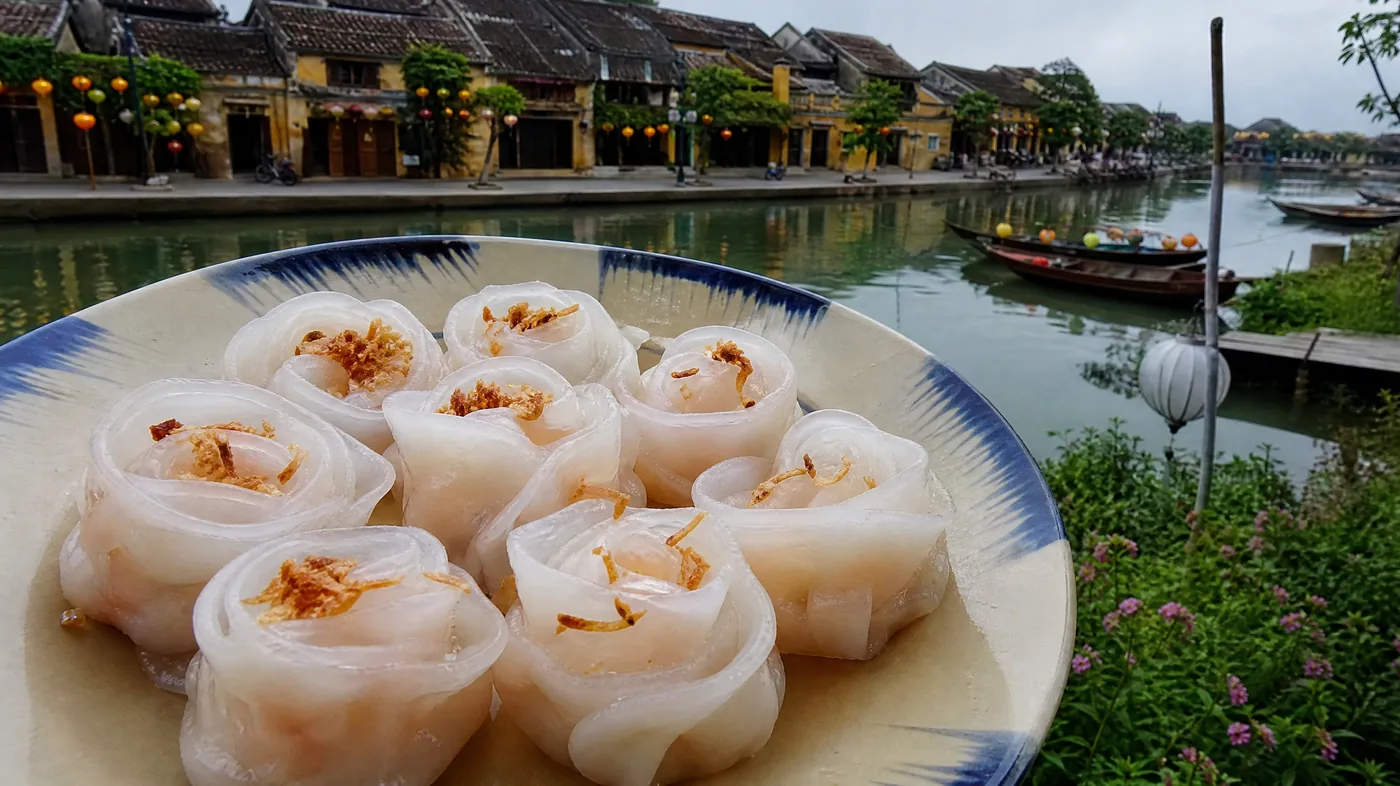
Both are Hoi An classics. The white rose dumplings come from one family's kitchen on Hai Ba Trung Street, and com ga, golden chicken rice, is sold all over town.
The Da Nang Department of Tourism explains the white rose (banh bao banh vac): two dumplings served together, a small round one with flared petal-like edges filled with pounded shrimp, and a larger crescent with shrimp, pork, wood ear and shiitake mushrooms. The rice-flour wrapper is filtered with water 15 to 20 times before it is rolled thin, and the dumplings are steamed for 10 to 15 minutes, then topped with crispy fried shallots. The owner of the White Rose Dumpling House, at 533 Hai Ba Trung Street, says his grandfather created the dish, and visitors can watch and try wrapping a few.
Com ga, per VNAT, is shredded poached chicken on rice cooked yellow with turmeric and broth, with herbs, chicken soup and a sour papaya salad. VNAT's line on it: after a day exploring the Ancient Town on foot, a plate of golden chicken rice is the perfect treat. No class on this site teaches either dish, so eat them in town.
What did Anthony Bourdain eat in Hoi An?
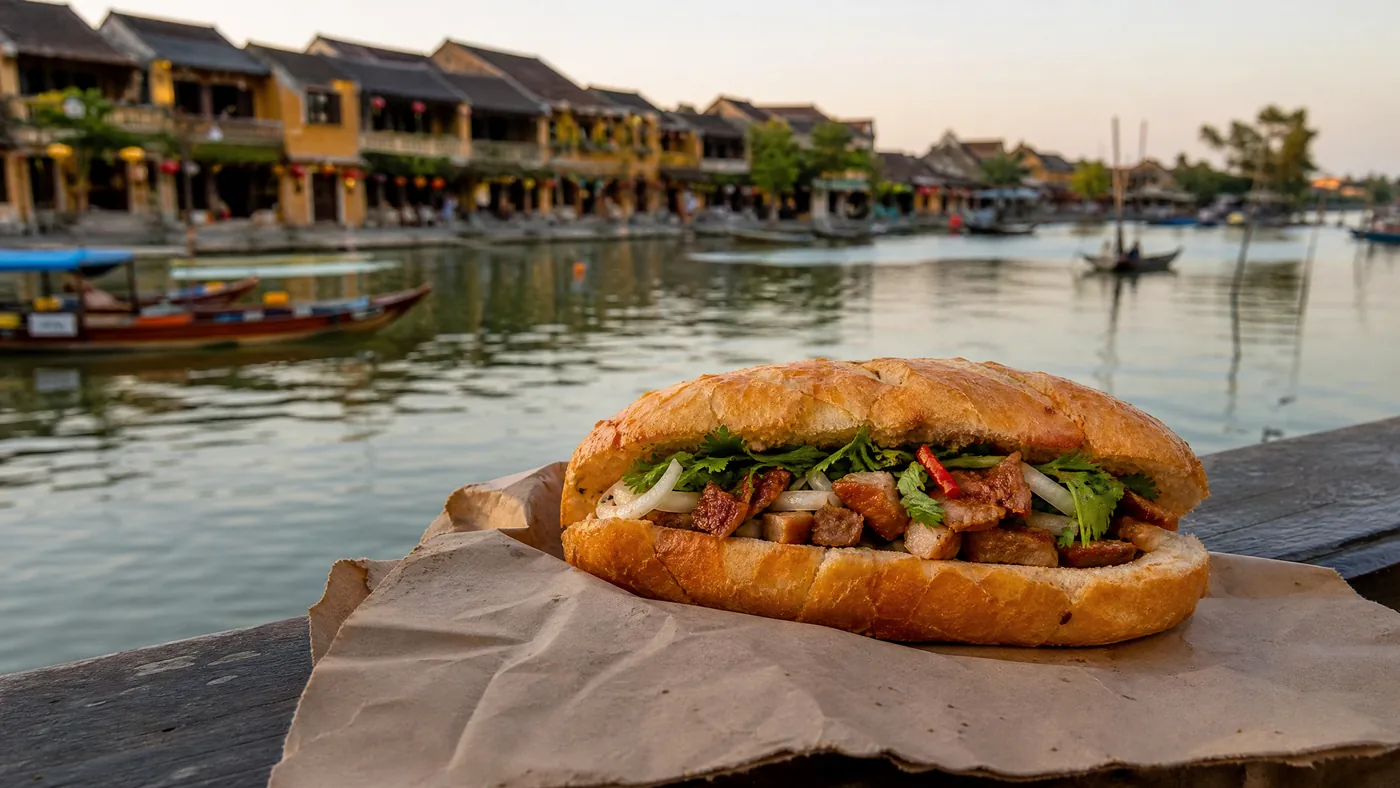
A banh mi at Banh Mi Phuong. Tuoi Tre News reports that he first visited in 2007, came back to film it for "Anthony Bourdain: No Reservations" and called it "a symphony in a sandwich".
The stall started at Hoi An Market; owner Truong Thi Phuong told Tuoi Tre News she had no idea who he was. VNAT's own Hoi An food guide still cites Bourdain on Banh Mi Phuong, which it lists at 2B Phan Chau Trinh, next to Madam Khanh, "the Banh Mi Queen", at 115 Tran Cao Van. Street stalls all over town sell banh mi too, per VNAT.
The famous Obama and Bourdain meal was not in Hoi An. It was in Hanoi in May 2016: bun cha, rice noodles with grilled pork, at Huong Lien on Le Van Huu Street, per Tuoi Tre News. In Vietnam a banh mi is mostly a breakfast or a snack, says Wikipedia, and the baguette itself arrived with the French in the mid-19th century.
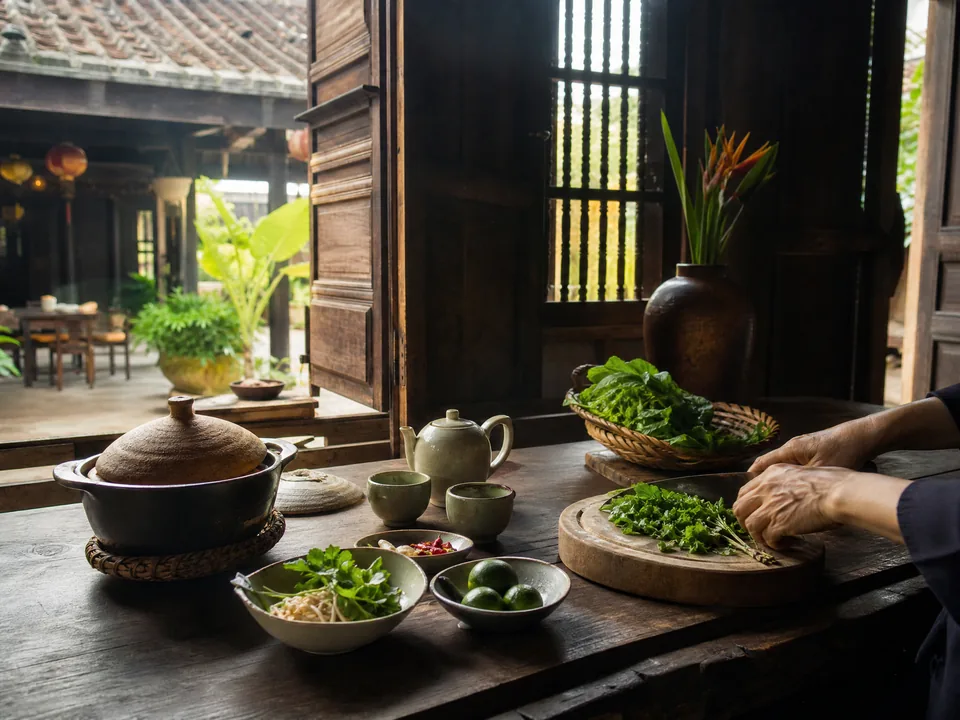
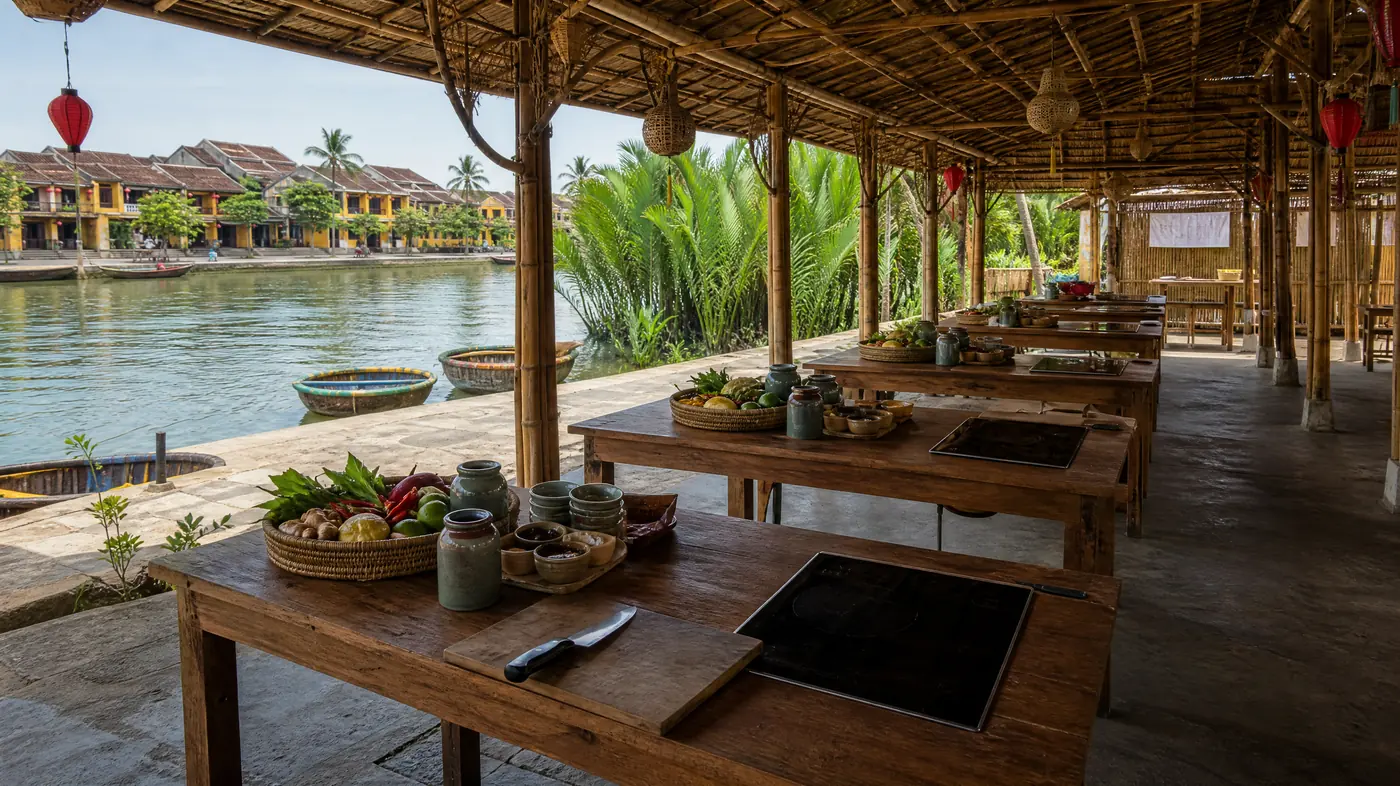
Home cooking with an English-speaking chef: pancakes, spring rolls and more, then a shared meal in Cam Thanh village.
Explore the family cooking class Tour detailsWhat is a must-eat in Vietnam, and is pho really eaten there?
Yes, pho is everyday food in Vietnam. VNAT says it is found on almost every street corner and, to many visitors' surprise, eaten mostly for breakfast.
Pho is the most famous dish of northern Vietnamese cooking (Wikipedia), a noodle soup with a clear broth from long-boiled meat and spices, most often beef or chicken. Every region makes its own, and Hoi An is no exception. VNAT's list of 21 must-try Vietnamese dishes also has banh mi, banh xeo ("best appreciated fresh off the skillet"), goi cuon, the fresh salad roll, Hanoi's bun cha and com tam, broken rice. Cao lau and mi Quang are on it too, which tells you how much central Vietnam punches above its weight.
Want to cook pho? The market tour and class, the lantern workshop and the Hoi An kitchen of the cooking class with pickup all have beef noodle soup on the menu, per the listings.
The market, a basket boat and a class cooking banh cuon, banh xeo, pho and che: pick the full option.
Check dates for the market, basket boat and cooking classWhat do Vietnamese eat for breakfast, and when is dinner?
Breakfast is often eaten out: pho, sticky rice, banh cuon, banh mi or a noodle soup. Dinner is usually a shared family meal of rice with several dishes, though no official source gives a set hour for it.
VNAT recommends banh cuon, steamed rice rolls, "for breakfast, like a local", and calls savory sticky rice (xoi man) a popular, inexpensive breakfast. Tuoi Tre News, in a 2018 report on how Vietnamese eat breakfast, lists sticky rice, pho, bun bo Hue, bun rieu cua, com tam, banh mi and banh bao, and describes a Ho Chi Minh City family up at 5am to cook breakfast before school.
The main meal at home, per Wikipedia, is built around white rice: a main dish of fish, meat or tofu, green vegetables, a clear soup called canh, dipping sauces, a few pickles and fruit or che to finish. All the dishes go in the middle and are shared, and the younger people wait for the elders to start. Before eating, people say "Chuc ngon mieng!", enjoy your meal (VNAT).
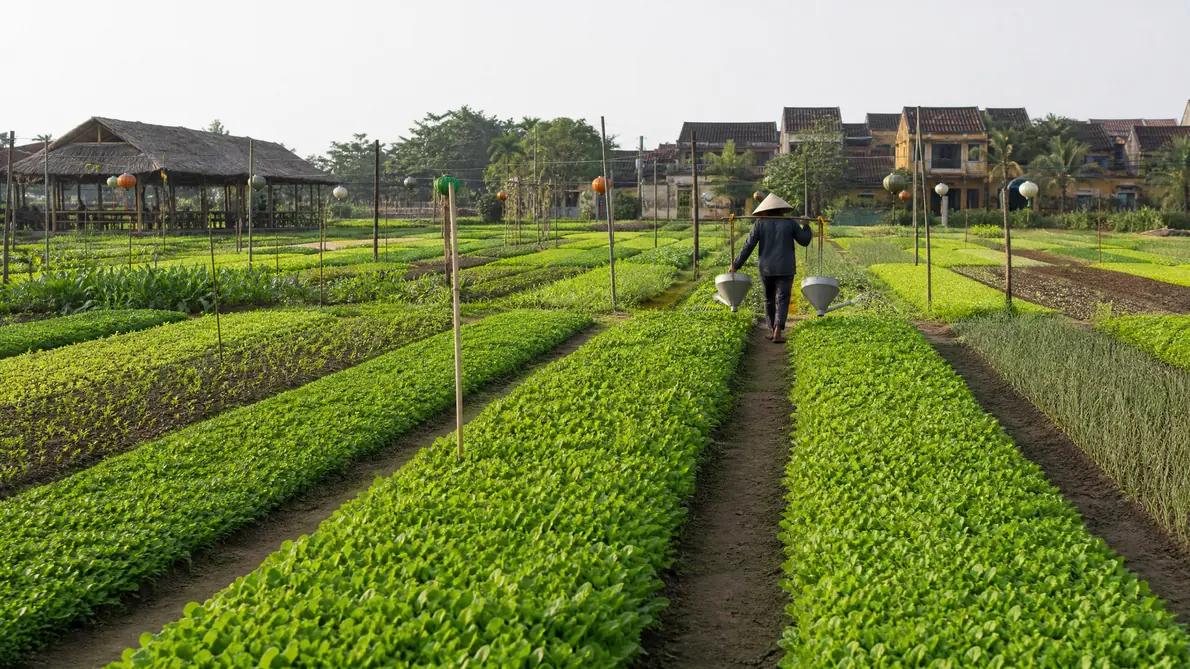
For a class that ends with dinner, the family class has an evening slot at 18:00 in the Tra Que herb garden, and the cooking-only class starts at 4.30pm in Cam Thanh, per the listings.
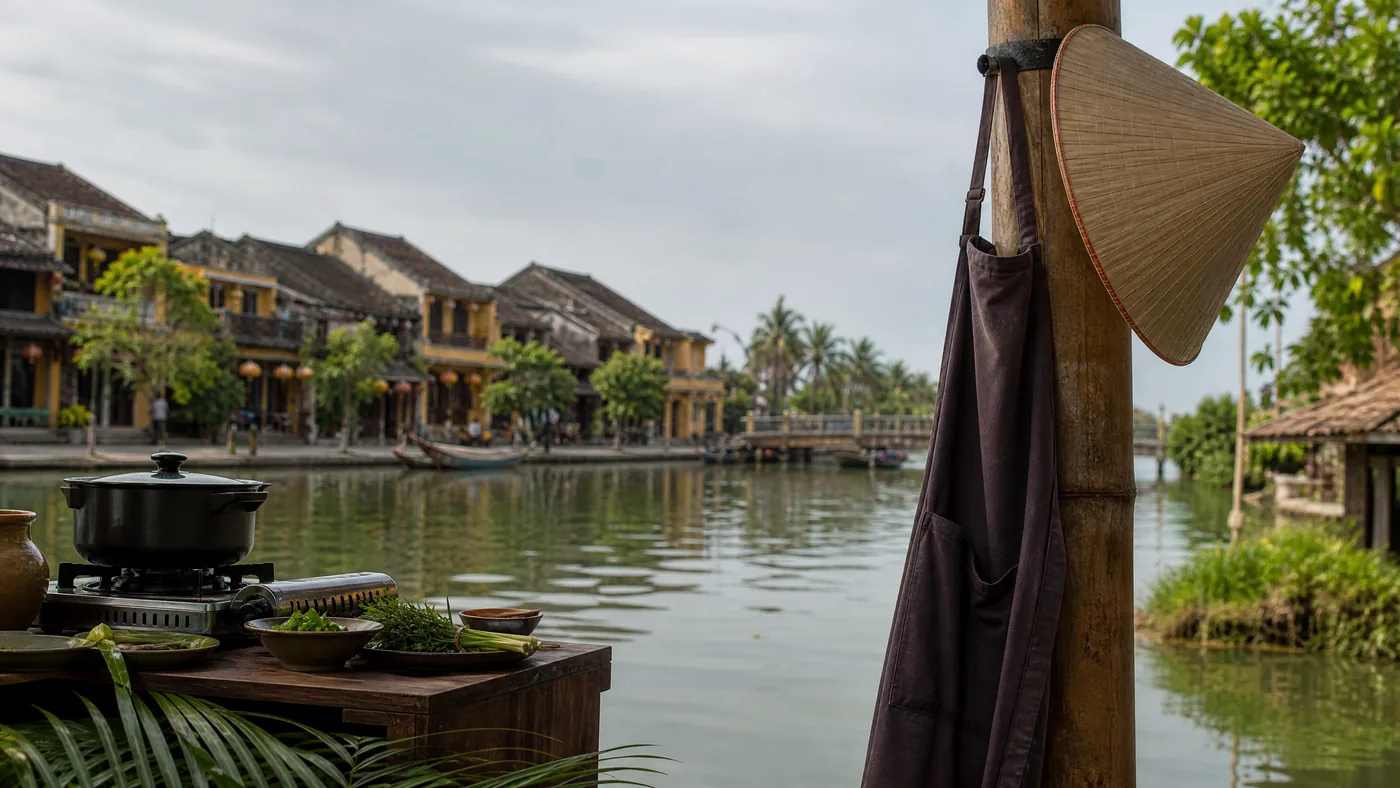
Four dishes in two hours with hotel pickup in Hoi An or Da Nang, morning or afternoon.
Check dates for the cooking class with pickupWhich Hoi An cooking classes cook which dishes?
Banh xeo and spring rolls appear on almost every menu. Pho, banh cuon and che come with the market classes, cao lau with the lantern making class and mi Quang with the cooking-only class in Da Nang.
The dishes below are from each listing's menu. Several operators say the menu can change a little with the season or the ingredients of the day, so treat it as a guide:
| Dish | What it is | Cooked on (per the listings) |
|---|---|---|
| Cao lau | Chewy lye-water noodles with pork, herbs and crisp croutons | Lantern making class |
| Mi Quang | Turmeric rice noodles, a little broth, peanuts, rice cracker | Cooking class with pickup (Da Nang kitchen, Monday, Wednesday, Friday) |
| Pho (beef noodle soup) | Rice noodles in a clear beef broth | Market tour and class, lantern workshop, cooking class with pickup |
| Banh xeo | Crispy rice pancake, rolled with herbs | Market tour and class, lantern making, cooking only, organic farm, lantern workshop; pancakes on the family class and Tra Que |
| Banh cuon | Steamed rice rolls | Market tour and class, lantern workshop |
| Che | Sweet bean soup | Market tour and class, lantern workshop |
| Spring rolls | Fried, fresh or Tra Que style | Lantern making, cooking only, Tra Que, organic farm, family class |
| Green papaya salad | Shredded papaya with herbs | Cooking class with pickup, organic farm |
| Fish in clay pot | Fish braised in a clay pot | Organic farm class |
| Fried wontons | Crisp wontons | Lantern making class |
Two more menus are open. The crab fishing class lets you pick your 5 courses at check-out, and the kitchen adds garlic spinach, steamed rice and dessert. The vegan school cooks four vegan recipes. Niamh did the family class in Sep 2026: "We made banh xeo, spring rolls, fresh rolls and stir fried morning glory with garlic."
Frequently asked questions
How do you avoid a stomach bug in Hoi An?
The Vietnam National Authority of Tourism advises sticking to bottled or filtered water and eating at busy food stalls with high turnover. Mild stomach upsets are the most common issue it lists.
Can you brush your teeth with tap water in Vietnam?
We found no official line on brushing teeth. VNAT's advice for drinking water is to stick to bottled or filtered water.
Is Hoi An food spicy?
Central Vietnamese cooking is the spiciest of the three regions, per Wikipedia, and in Hoi An chili often comes on the side: cao lau, for one, is served with lime and chili to taste.
How do you say enjoy your meal in Vietnamese?
"Chuc ngon mieng!" VNAT notes that Vietnamese people say it before they start eating.
Ready to book
Choose your class
Free cancellation up to 24 hours before on every option. Prices are from-prices in USD and move with the season.
Traditional Cooking Class & Meal with a Local Family
- English-speaking chef
- Welcome tea
- All ingredients
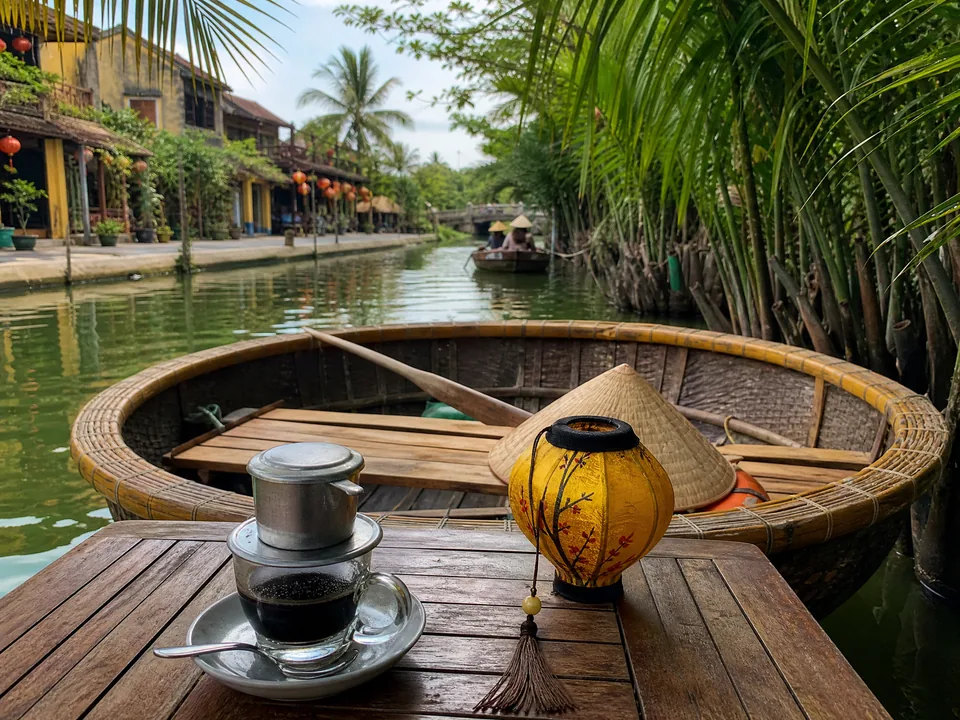
Cooking Class, Basket Boat, Coffee & Lantern Making
- Hotel pickup and drop-off in Hoi An
- Basket boat ride and entry fees
- Cooking class and meal
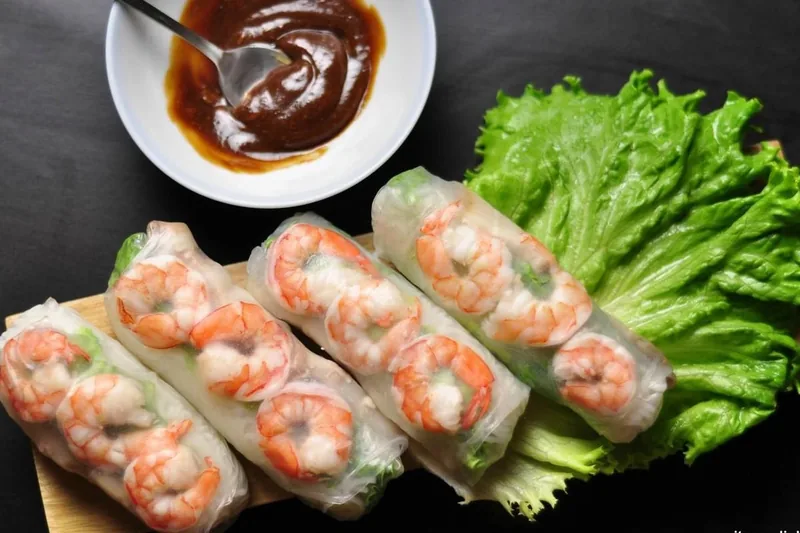
Vietnamese Cooking Class with Transport from Hoi An or Da Nang
Four dishes in two hours, no market or boat, good with kids